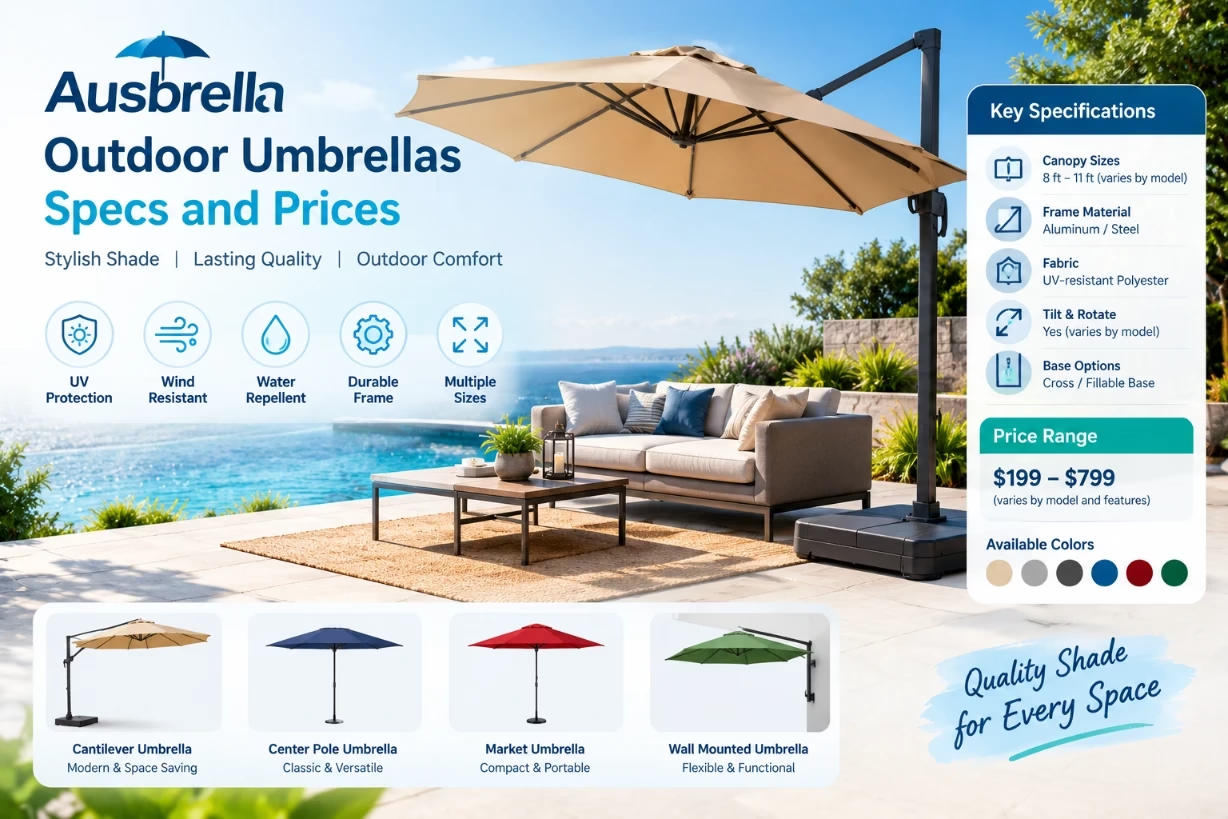
Ausbrella outdoor umbrellas are heavy duty, wind rated market umbrellas made in Australia by Awnet, built for resorts, councils, and serious backyard use. Below I break down key Ausbrella specs, models, typical price ranges, and how to decide if this kind of commercial grade shade is worth it for your space.
What Makes Ausbrella Different From Standard Outdoor Umbrellas
When people first hear about ausbrella umbrellas, they often think it is just another patio umbrella with a fancy name. I thought that too, until I dug into the test data and engineering story behind the brand. Ausbrella was designed in Melbourne for tough Australian conditions, not for a quiet, wind-free showroom.
The core idea behind ausbrella is simple. Most outdoor umbrellas fail in wind. The canopy flips, the pole bends, ribs snap, and fabric tears. Awnet set out to build an umbrella that keeps standing when the cheap ones break, even in council parks, beachfront resorts, and exposed rooftop terraces. That is why the company calls ausbrella “the world’s strongest umbrella.”
To get there, the design uses a special twin skin pole, certified engineering, and full scale wind tunnel tests with speeds that most backyard umbrellas never see. Instead of a light hollow pole that flexes and buckles, ausbrella uses a double wall system that gives you strength without turning the pole into a huge heavy post.
Key Structural Specs Of Ausbrella Outdoor Umbrellas
I want to walk through the main specs in plain language, so you can picture how ausbrella is built and why it costs more than a big-box-store umbrella.
Twin Skin Pole Design
The heart of every ausbrella model is the patented twin skin pole. Think of it as two poles in one. There is a structural inner post and a second outer skin that together act like a thick, rigid column. That layout spreads wind loads more evenly and keeps the pole from folding under pressure.
On paper, this looks like talk about section modulus and moment of inertia. In real life, what it means is simple. When a gust hits the ausbrella canopy, the pole barely moves, even with a large span. If you have ever watched a normal umbrella lean over and stay bent after a storm, you already know why this matters.
Wind Ratings And Test Results
Ausbrella is not guessing with its wind numbers. The range has been wind tunnel tested through Monash University in Australia, and the umbrellas are rated by independent engineers. Some models in the ausbrella line are tested beyond 160 km/h wind speeds, which is far above the level that most local regulations even ask for.
In practice, this gives you a clear match between your site and the right ausbrella model. Exposed coastal resort with strong gusts and storm fronts rolling through? You look at the higher rated ausbrella Hurricane range. Cafe courtyard in a suburban street where winds are milder? The Storm range is usually enough.
Engineer Certification And Compliance
Every ausbrella frame is backed by engineering certificates that link to Australian Standards and local council compliance needs. That might sound dry, but if you run a cafe, bar, school, or hotel, it is a big deal. Councils and insurers want proof that your shade structures meet safety expectations.
With ausbrella, you can usually hand over wind ratings, structural details, and region guidance to your surveyor or inspector and move on. If you have ever dealt with generic imports that come with no local paperwork at all, you know how painful that can be. This is one quiet advantage that ausbrella brings to the table.
Canopy Fabric And Cover System
On the canopy side, ausbrella uses marine grade acrylic or premium vinyl options, depending on the exact model and spec you choose. These are thick, UV stable fabrics designed to handle strong sun day after day, with good resistance to fading and mildew.
The covers are bolt on, not just loosely laced. I like this for two reasons. First, a bolt on ausbrella cover does not peel off in a storm like a simple pocket and cord system can. Second, when the canopy eventually needs replacing after years outside, it can be taken off and swapped without throwing away the whole frame.
Opening And Closing Mechanism
Most ausbrella umbrellas use a straightforward lift system without ropes and pulleys dangling down. The lift action is balanced, so a single staff member can open and close a large ausbrella without struggling or yanking on lines. That sounds like a small detail, but in a busy venue, it matters. Less moving hardware means fewer things to tangle, wear, or snap.
Mounting System And Sockets
Instead of a heavy loose base that people trip over, ausbrella typically uses an in ground stainless steel socket. The frame post slides into the socket and locks. This setup keeps the center clear, resists overturning, and looks much cleaner on a deck or paved plaza.
If you are planning an ausbrella install, the mount is one area where you want a local contractor involved. The frame is only as strong as the footing you set it in. A proper concrete footing around the ausbrella socket makes all the difference for long term safety.
Ausbrella Model Range And Typical Use Cases
The ausbrella name covers a family of heavy duty umbrellas, mainly aimed at commercial projects and serious residential users. I will keep this simple, because most buyers do not need a wall of tech specs. What you really care about is: which ausbrella suits my location and wind zone.
Ausbrella Storm Range
The Storm line is the starting point in the ausbrella family. These umbrellas are engineered for strong winds, with ratings around 120 to 140 km/h depending on the exact size and spec. They work well in most typical Australian suburban regions and many inland sites where gusts are serious but not cyclone level.
Common buyers for ausbrella Storm include:
- Cafes and restaurants on busy streets that want permanent outdoor seating.
- Schools and childcare centers that need shade over play areas.
- Homeowners with a large deck or pool area in a windy suburb.
Storm ausbrella units give you commercial level durability without the extreme spec of the highest models. For many locations, this is the sweet spot between cost and strength.
Ausbrella Hurricane Range
The Hurricane range pushes wind rating even higher, with certified performance in winds beyond 160 km/h. These ausbrella models are aimed at coastal high wind zones and cyclone prone regions. They include a reinforced twin skin pole and frame layout tuned for serious gusts.
Typical buyers for ausbrella Hurricane include:
- Beachfront resorts and hotels exposed to ocean winds.
- Council parks and foreshore promenades.
- Large rooftop terraces on tall buildings.
If your site falls into a mapped high wind region, a Hurricane ausbrella is usually the model your engineer or council contact will expect. It is not about overkill; it is about matching the umbrella to the true risk level of your location.
Common Size And Shape Options For Ausbrella Umbrellas
Exact size charts change over time, but there are some consistent patterns in the ausbrella range. You will normally see square and octagonal canopies with spans designed to cover typical outdoor table settings or small group zones.
Here is how I think about sizing when looking at ausbrella specs:
For a cafe or bar, a typical ausbrella might be set up to shade a 4 seat or 6 seat table arrangement, with enough overhang to keep diners covered even as the sun angle changes. For resort pools, larger ausbrella units can cover lounge groups or daybed clusters.
The twin skin pole keeps deflection low even on bigger spans, so you can often go wider with ausbrella than you would dare with a generic aluminum pole umbrella in the same wind exposure.
Ausbrella Prices And Cost Ranges
Let’s talk about the part everyone really wants to know. What does ausbrella actually cost, and how do different specs change the price. I cannot give live quotes here, because prices move with currency, freight, and raw materials, but I can give realistic ranges based on how this class of product is usually sold.
Why Ausbrella Costs More Than Standard Patio Umbrellas
Ausbrella is a commercial grade, locally made system that includes engineering, wind testing, high grade fabrics, heavy frames, and stainless steel sockets. You are not just buying shade; you are buying structure and certification.
Compare this to a budget big box umbrella that sells for a few hundred dollars. Those products usually use thin poles, basic polyester canopies, and low cost fittings with no certified wind rating. They may be fine for a sheltered courtyard on gentle days, but in tough wind they simply are not in the same league as ausbrella.
Typical Price Range For Ausbrella Storm Models
Storm series ausbrella umbrellas often land in the mid to high four figure range per unit when you include frame, canopy, and in ground mounting hardware. Smaller sizes with standard fabric and basic branding may sit closer to the lower end of that range. Larger spans, upgraded fabrics, or full custom printing will move the number upward.
For a cafe or small venue, this means each ausbrella is a serious capital item, not an impulse purchase. The payoff comes from long life, reduced replacement cycles, and the peace of mind of a structure that can stay up where cheaper options must be taken down or written off after each storm season.
Typical Price Range For Ausbrella Hurricane Models
Hurricane ausbrella units, with their extreme wind ratings and heavier duty detailing, sit higher again. It is common for fully installed costs to push deeper into the four figure or even low five figure range per umbrella, especially for larger spans or complex site installs.
These are often part of large projects: foreshore upgrades, resort redevelopments, or council precinct works, where ausbrella becomes one line in a bigger budget. In that context, the extra spend to get a wind rated ausbrella system is usually justified by safety and replacement cost savings.
Factors That Influence Final Ausbrella Price
Several elements will move your ausbrella quote up or down:
- Canopy size and shape: larger and more complex shapes cost more.
- Wind rating: Hurricane spec ausbrella units cost more than basic Storm ones.
- Fabric choice: premium marine acrylic and custom colors increase price.
- Branding and printing: logos and full coverage graphics add setup and print costs.
- Mounting: simple flat sites are cheaper to install than sloping or complex surfaces.
- Quantity: larger orders of ausbrella usually attract better per unit pricing.
While ausbrella is not the cheapest shade option, it often becomes the most cost effective over ten or fifteen years of use, especially in hard climates. You buy it once, instead of replacing cheaper umbrellas every other season.
Warranty And Lifespan Expectations
One of the strongest signals of confidence in any outdoor product is the warranty term. Ausbrella frames and covers typically carry multi year warranties, with frame coverage reaching five years on many specs. In some earlier marketing, there are references to even longer frame guarantees on specific ausbrella lines.
In real life, a well mounted ausbrella in a suitable wind region can go far beyond its nominal warranty term, especially if you follow cleaning and maintenance advice. Regular checks of fittings, keeping salt and grime off the hardware, and closing the canopy during extreme weather will all help the ausbrella system last longer.
Who Ausbrella Is Best For
I always find it helps to speak plainly about fit. Ausbrella is not for everyone. If you are renting an apartment with a tiny balcony and mild weather, a simple market umbrella from a local store might serve you just fine at a fraction of the cost.
But there are clear situations where ausbrella is worth taking seriously:
- You manage a business that depends on safe, reliable outdoor seating such as a cafe, bar, or restaurant.
- You are a facilities manager for a school, council, or public precinct where duty of care is front and center.
- You are building or renovating a high value home with an exposed deck, pool, or rooftop and want something closer to a permanent structure.
- You live in a known high wind or coastal zone and are tired of throwing away broken umbrellas.
In these cases, ausbrella gives you a level of reassurance that cheaper products simply do not reach. The upfront strain on the budget is real, but the long term comfort and fewer headaches are real too.
How To Choose The Right Ausbrella For Your Space
If you decide that ausbrella sounds like the right direction, the next step is matching the exact model and spec to your site. I like to think through five simple questions:
1. What Is My Wind Exposure?
Stand in the spot where your ausbrella will go and watch how the wind behaves during a normal breezy day and during a storm. Are you shielded by buildings and trees, or wide open to long fetch winds. Your honest answer here will steer you toward Storm or Hurricane ausbrella series and size limits.
2. How Much Area Do I Really Need To Shade?
It is tempting to go as big as possible, but larger ausbrella units mean more load and higher cost. Measure your tables, loungers, or play equipment footprints. Often, a carefully placed slightly smaller ausbrella can do the job with less visual weight and lower price.
3. Is Permanent Mounting Acceptable?
Ausbrella is at its best when mounted in a fixed socket. If your space must constantly change layout, or if you cannot alter the ground, you may need to talk through alternative bases or even consider a different style of umbrella. For permanent hospitality or civic layouts, the standard ausbrella in ground mount is usually ideal.
4. What Look Am I Going For?
Ausbrella offers different canopy colors and the chance to add branding for businesses. For a resort, you might lean toward neutral tones that match your landscape palette. For a cafe, a bold branded ausbrella canopy can double as a street level sign, catching eyes from a distance.
5. What Does My Budget Look Like Over Ten Years, Not One?
This is where ausbrella often wins. If you replace a cheaper umbrella every couple of years due to fabric tearing or pole failure, those costs add up quickly. Spreading an ausbrella level investment over a ten year window can actually come out ahead, especially when you factor in fewer safety worries and less staff time spent wrestling with failing gear.
Final Thoughts On Ausbrella Specs And Prices
Ausbrella sits in a very specific corner of the outdoor shade market. It is a tough, wind rated, engineer certified umbrella system with real test data behind it. The twin skin pole, marine grade fabrics, and heavy duty sockets are not just talking points; they are the reasons ausbrella umbrellas stay standing in conditions that fold ordinary patio umbrellas.
If you are planning serious outdoor seating, a long term resort layout, or public shade in a windy region, treating ausbrella as a structural investment rather than a decor purchase makes sense. Reading spec sheets, asking for wind ratings, and getting a proper quote that includes installation will give you a clear picture of whether ausbrella is the right fit for your project and your budget.