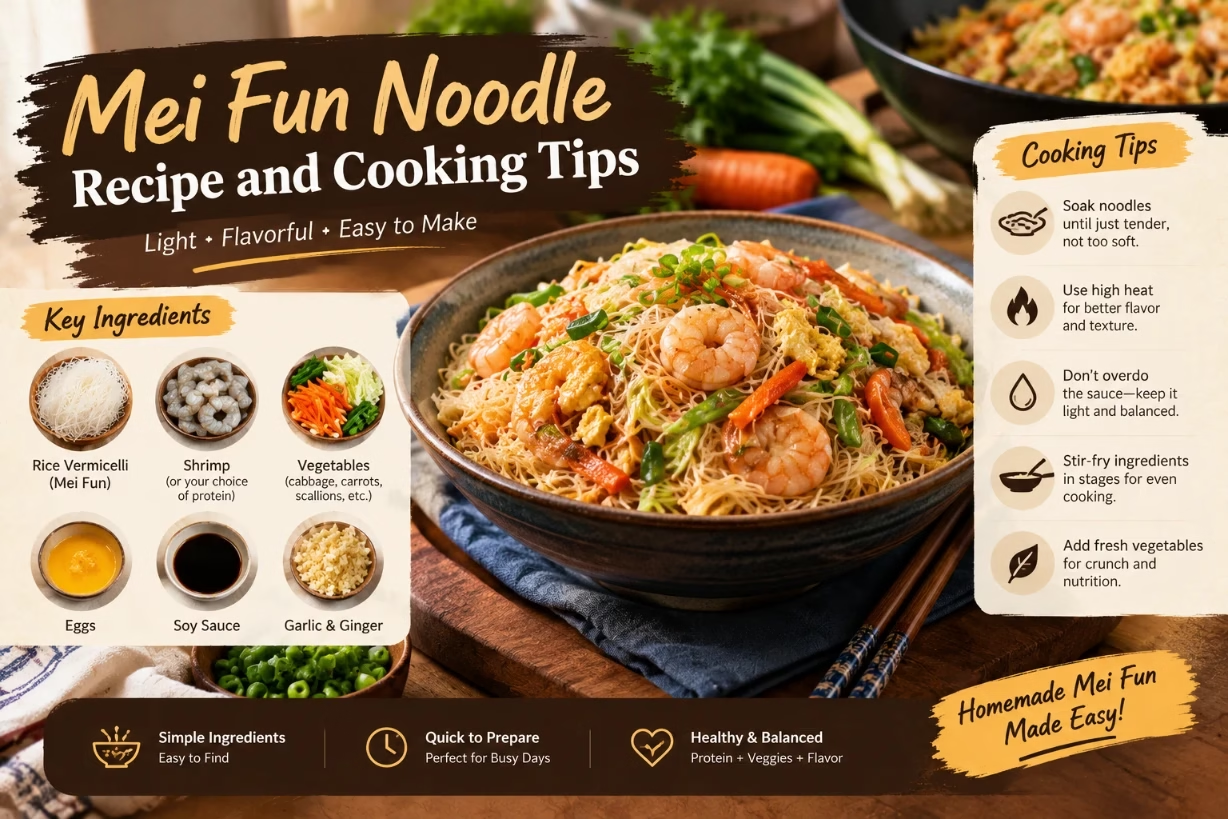
Mei fun is a thin rice noodle stir fry made with vegetables, protein, and savory sauce; you soak dried noodles, quickly stir fry everything in a hot pan, then toss it all together for a light, fragrant, and satisfying dish ready in about 30 minutes.
If you love takeout-style noodles, learning a solid mei fun noodle recipe at home is one of the best cooking skills you can pick up. I like it because it is quick, flexible, and feels light but still fills you up. In this guide, I will walk you through exactly how to cook mei fun, how to keep the noodles from breaking or turning mushy, and how to adjust flavors so the dish fits your own taste.
What Is Mei Fun And Why People Love It
Mei fun is a Cantonese-style dish made with very thin rice noodles, often called rice vermicelli. These noodles cook fast and soak up flavor like a sponge. In many Chinese restaurants, mei fun shows up as Singapore mei fun with curry, shrimp mei fun, or simple vegetable mei fun. The name may change a little from place to place, but the idea is the same: stir fried rice noodles with a mix of vegetables, eggs, and some kind of meat or tofu.
What makes mei fun stand out from other noodle dishes is the texture. Because the noodles are so thin, every bite gives you a mix of silky noodles, crisp vegetables, and small bits of meat. There is no heavy sauce pooling in the bowl. Instead, the seasoning clings to the noodles in a light, even way. When you cook it correctly, you get noodles that are tender but still springy, never soggy.
Key Ingredients For A Restaurant-Style Mei Fun Noodle Recipe
Before we cook, I want to break down the main parts of a classic mei fun so you know why each piece matters. Once you understand the base, you will feel free to swap ingredients and still keep that true mei fun feeling.
1. The Noodles: Choosing The Right Mei Fun
For any mei fun recipe, the noodles are the star. Look for packages labeled rice vermicelli, rice sticks, or mei fun noodles. They should be very thin, almost like angel hair pasta but white and slightly translucent. They are sold dried and usually bundled or coiled.
Here is what I watch for when I buy mei fun noodles:
- Ingredients list should be short, usually just rice and water, maybe tapioca or cornstarch.
- Noodles should not have a strong smell in the package, just a faint rice scent.
- Strands should look even, not crushed into dust at the bottom.
If you pick medium or thick rice noodles instead, the dish will still taste fine, but the texture will not match classic mei fun. Thin vermicelli cooks faster and gives that light, springy bite you expect from proper mei fun.
2. Vegetables For Color And Crunch
Mei fun is a great way to clear out your fridge. At the same time, there are a few vegetables that show up again and again because they add color and crunch without getting watery:
- Shredded green cabbage
- Carrot matchsticks
- Bean sprouts
- Green onion
- Thinly sliced bell pepper
- Onion strips
If I have napa cabbage, snow peas, or baby bok choy, I toss those in too. The main goal is balance. Mei fun feels best when each bite has a good mix of tender and crisp, not all soft vegetables. Try to keep most veggies sliced thin, so they cook in a couple of minutes.
3. Protein Choices For Mei Fun
You can keep your mei fun meatless, but in many takeout versions you will see a mix of meats. Typical choices include:
- Chicken breast or thigh in thin strips
- Peeled shrimp
- Pork strips or Chinese BBQ pork
- Beef slices cut against the grain
- Firm tofu cubes or strips
- Egg, scrambled lightly and sliced
I like to use at least one protein plus egg, because egg gives extra richness and the yellow ribbons look nice against the pale mei fun noodles. If you want a loaded house-style mei fun, you can mix chicken, shrimp, and a little pork all in one pan.
4. Sauce And Seasonings
The sauce in a good mei fun recipe is simple but bold. You do not want a thick gravy. You just want enough liquid to season and lightly stain the noodles. Here is a reliable base for one family-size pan of mei fun:
- 2 tablespoons light soy sauce
- 1 tablespoon oyster sauce
- 1 tablespoon Shaoxing wine or dry sherry
- 1 teaspoon sesame oil
- 1 teaspoon sugar
- White pepper to taste
If you want a Singapore-style curry mei fun, add 1 to 2 teaspoons of curry powder. For spicy lovers, a spoon of chili paste or chili crisp works well. The idea is to mix your sauce in a small bowl before you start cooking, so you can add it quickly while stir frying and not overcook the noodles.
Step-By-Step Mei Fun Noodle Recipe (Home Kitchen Friendly)
Now I will walk you through a detailed mei fun noodle recipe you can follow even if you are new to stir fry cooking. I will assume you serve about 3 to 4 people.
Ingredients
For the noodles and toppings:
- 6 to 7 ounces dried mei fun rice vermicelli
- 6 ounces chicken breast, thinly sliced
- 8 medium shrimp, peeled and deveined (optional but tasty)
- 2 eggs, lightly beaten
- 1 cup shredded cabbage
- 1 small carrot, cut into matchsticks
- 1/2 small onion, thinly sliced
- 1/2 red bell pepper, thinly sliced
- 1 cup bean sprouts
- 2 to 3 green onions, cut into 1.5 inch pieces
- 2 to 3 tablespoons neutral oil (peanut, canola, or vegetable oil)
- Salt and white pepper as needed
For the mei fun sauce:
- 2 tablespoons light soy sauce
- 1 tablespoon oyster sauce
- 1 tablespoon Shaoxing wine or dry sherry
- 1 teaspoon sesame oil
- 1 teaspoon sugar
- 1 teaspoon curry powder (optional for curry mei fun)
- 1 to 2 teaspoons chili paste or chili oil (optional)
1. Soak The Mei Fun Noodles The Right Way
This is the part that confuses most beginners. Mei fun cooks fast, and boiling it like pasta makes it mushy. I always soak the noodles instead of boiling.
Place the dried mei fun noodles in a large bowl. Pour very hot tap water or water just below a simmer over the noodles until they are fully covered. Let them soak 5 to 8 minutes, gently loosening them with chopsticks or a fork halfway through. When they are soft but still slightly firm in the center, drain them in a colander.
Rinse briefly with cool water to stop cooking, then shake well to remove extra moisture. You want the mei fun noodles to feel soft, not sticky or waterlogged. If they sit for a while, toss them with a teaspoon of oil so they do not clump.
2. Prep And Marinate The Protein
While the mei fun soaks, season your meat. For the chicken, mix it with a small pinch of salt, a dash of white pepper, and 1 teaspoon soy sauce. If you want tender meat, you can add 1/2 teaspoon cornstarch and mix well. Shrimp just needs a little salt and pepper.
Let the protein sit for at least 10 minutes while you cut vegetables. This quick marinade gives the protein more flavor so the whole mei fun stir fry tastes better with every bite.
3. Pre-Mix The Sauce
In a small bowl, stir together all the sauce ingredients until the sugar dissolves. Taste it. It should be a little salty and slightly sweet, with a hint of sesame. Remember that the sauce will spread across a lot of noodles and vegetables, so it can taste a touch stronger in the bowl than you want in your final mei fun.
If you like more soy flavor, add another teaspoon. If you want more curry mei fun style, bump the curry powder up a bit. Once you are happy, set the bowl near your stove so you can grab it fast while stir frying.
4. Scramble The Eggs First
Heat a wok or large wide pan over medium-high heat. Add about 1 teaspoon of oil, then pour in the beaten eggs. Tilt the pan to spread them out, then gently scramble until just set. They should stay soft, not browned or rubbery. Remove the egg to a plate and break into strips once cool enough to handle.
I cook the egg first because it keeps the egg tender and makes room in the pan later. The soft egg ribbons mix nicely with the thin mei fun noodles.
5. Stir Fry The Protein
Turn the heat a bit higher. Add 1 tablespoon of oil. When the oil shimmers, add the chicken in a single layer. Let it sear for a minute before you start stirring. Cook until the chicken is no longer pink and edges get light golden. If you use shrimp, toss it in with the chicken during the last 2 minutes, cooking until just opaque.
Transfer the cooked meat to the same plate as the eggs. Do not wash the pan. The brown bits stuck to the bottom add flavor to the mei fun later.
6. Cook The Vegetables Quickly
Add another tablespoon of oil to the hot pan. Toss in onion and bell pepper first, since they need more time. Stir fry for about 1 minute, then add carrot and cabbage. Keep the vegetables moving so they do not burn. You want them crisp-tender, not limp.
When the cabbage starts to wilt slightly, add bean sprouts and most of the green onion (save a bit of green part for garnish). Stir fry another 30 to 45 seconds. At this point the pan should smell fragrant and the vegetables should still have bright color and crunch.
7. Add Noodles, Sauce, And Bring Mei Fun Together
Now comes the fun part. Add the soaked and drained mei fun noodles to the pan, along with the cooked chicken, shrimp, and egg. Use tongs or long chopsticks to gently lift and toss, not chop or mash. Pour the sauce evenly over the noodles while tossing so it spreads through the whole pan.
Stir fry for 2 to 3 minutes. Keep the heat fairly high, but if the noodles start to stick too much, drop the heat a bit and add a splash of water to loosen things. The goal is to coat every strand of mei fun in sauce while keeping the noodles long and separate.
Taste a bite. If it needs more salt, add a few drops of soy sauce. If you want more aroma, drizzle a bit more sesame oil at the end. Throw in the remaining green onion and give it one last toss.
8. Rest And Serve
When the noodles look glossy and steaming hot, turn off the heat. Let the mei fun rest in the pan for one minute. This short rest helps the sauce soak fully into the noodles. Then serve straight from the pan onto warm plates or into bowls.
Good mei fun should look light and fluffy, not clumped together. Each strand should carry a light sheen of sauce, and you should see bits of chicken, shrimp, egg, and colorful vegetables scattered all through the noodles.
Common Mistakes People Make With Mei Fun Noodles
Even with a clear recipe, mei fun can go wrong if you rush a few key steps. I want to walk through the most common problems I see and how to fix them before they happen.
Noodles Turn Mushy Or Break Apart
If your mei fun breaks into short pieces or feels mushy, it usually means the noodles soaked too long or were boiled instead of soaked. Remember, these are thin rice noodles. They drink up water quickly. Watch them while soaking, and the moment they bend easily but still feel a tiny bit firm, drain them.
Another small trick is to avoid aggressive stirring once the noodles are in the pan. Use gentle lifting and tossing motions. If you jab and cut with a spatula, you will break the mei fun noodles into a mess.
Noodles Stick In A Big Clump
Sticky noodles happen when they go into the pan wet and stuck together. After soaking, drain very well and toss with a touch of oil if you are not using them right away. Also, make sure your pan is hot and you have enough oil at the start of stir frying.
When you first add the mei fun to the pan, use your hands or tongs to spread them out into a loose pile. This makes it easier for the sauce and oil to slide between strands.
Flavor Tastes Flat Or Weak
If your mei fun tastes bland, you probably used too little sauce, or the sauce ratio is off. Remember that vegetables and noodles both soak up seasoning. Do not be shy with soy sauce, oyster sauce, and white pepper. A small bit of sugar actually helps round out the salty taste and make the whole stir fry more balanced.
I also suggest tasting once near the end. If the flavor feels shy, splash in a bit more soy sauce, or finish with a drizzle of sesame oil and a small pinch of salt. This quick last check turns a decent mei fun into a great one.
Variations To Try Once You Master Basic Mei Fun
Once you feel comfortable with the classic version, you can play with different flavor ideas while still using the same base technique. Mei fun is flexible, and that is a big reason so many home cooks keep it in their regular rotation.
Singapore Curry Mei Fun
For a bright yellow, curry-scented version, add more curry powder to the sauce. I usually go up to 2 teaspoons and sometimes stir in a small spoon of turmeric for color. Use a mix of shrimp, pork, and egg, plus onion, cabbage, and bell pepper.
Singapore-style mei fun often has a stronger flavor and a gentle heat. If you enjoy spicy food, add chili oil and maybe sliced fresh chili. The curry perfume rising from the wok while the mei fun fries is one of my favorite kitchen smells.
Vegetable Mei Fun With Tofu
You can skip meat entirely and make a plant-focused version. Use firm tofu, pressed to remove moisture, then pan seared until golden on the outside. Cut it into strips and toss with the noodles near the end so it does not crumble too much.
Load your mei fun with broccoli florets, bok choy, mushrooms, and extra cabbage. For flavor depth, add a touch more soy sauce and a spoon of vegetarian oyster sauce or mushroom sauce if you have it.
Low-Sodium Or Lighter Mei Fun
If you are watching salt, swap regular soy sauce for low-sodium soy sauce and reduce oyster sauce a little. You can bring flavor back with more garlic, ginger, and white pepper. Also, stir in extra vegetables so the ratio of noodles to veggies is a bit lower. You still get the comfort of mei fun but with a lighter nutrient profile.
Practical Tips For Cooking Mei Fun In A Home Kitchen
Most of us are not cooking mei fun on a restaurant-grade wok burner. That is fine. You just need to adjust a few habits so you still get good stir fry results on a home stove.
Use The Right Pan And Heat Level
If you have a wok, that is great. If not, use the widest, heaviest skillet you own. A wide pan gives the noodles more contact with heat and stops them from steaming in a pile. Heat the pan until a drop of water sizzles and vanishes quickly. This helps keep the mei fun from getting soggy.
Do Not Overcrowd The Pan
Stir fry works best in batches. If you double the mei fun recipe, do not cook it all at once unless your pan is huge. Instead, cook half, remove it, then cook the other half. Overcrowding leads to a wet, steamy stir fry and uneven texture.
Prep Everything Before You Start
Stir frying goes fast. Once you turn the heat on, you will not have time to chop. Before you start cooking, make sure your mei fun noodles are soaked and drained, vegetables sliced, meat marinated, and sauce mixed. This simple prep step turns the cooking part into a smooth, stress-free process.
How To Store And Reheat Leftover Mei Fun
Mei fun keeps better than many noodle dishes, as long as you cool and store it right. Let the noodles cool to room temperature, then pack them in a shallow container. Keep them in the fridge for up to 3 days.
To reheat, I prefer a pan over a microwave. Add a tiny splash of water or a teaspoon of oil to a warm pan, then add the cold mei fun. Toss over medium heat until hot. The noodles loosen and warm without drying out. If you must microwave, cover loosely and heat in short bursts, stirring between each one.
Sometimes reheated mei fun benefits from a quick drizzle of soy sauce or sesame oil to freshen the flavor. Leftover mei fun also tastes great cold as a quick lunch, especially the curry versions.
Final Thoughts On Cooking Great Mei Fun At Home
When you break it down into simple steps, a good mei fun noodle recipe is very friendly even for new cooks. Soak, drain, and loosen the noodles. Cook egg and protein first. Stir fry vegetables fast. Then toss everything with a bold but light sauce until the mei fun shines and smells fragrant.
After you try it once or twice, you will start to change the vegetables, switch proteins, and maybe add your own secret spices. That is the real joy of home-style mei fun. You get restaurant flavor, but you also get control, comfort, and a plate of noodles shaped around your own taste.