
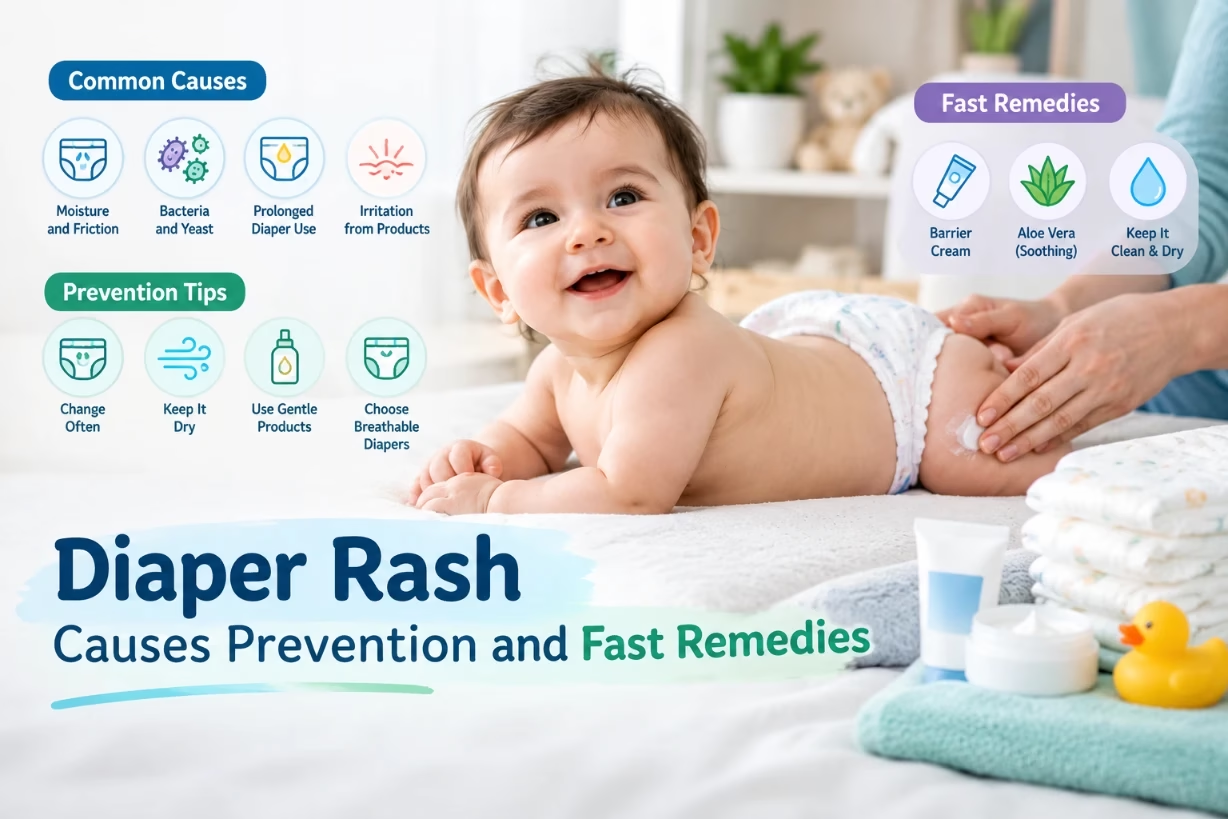
Diaper rash is a common skin irritation in babies that usually comes from too much moisture, friction, or contact with poop and pee; you can prevent most diaper rashes with frequent diaper changes, gentle cleaning, barrier creams, and a few fast home and medical remedies.
When I talk with new parents about diaper rash, I always start with one simple truth: almost every baby will get it at some point. That does not mean you did something wrong. It just means your baby’s skin is sensitive, diapers trap moisture, and life with a little one is messy and busy. The good news is that most diaper rash goes away quickly with the right care, and there is a lot you can do to prevent it from coming back.
What diaper rash actually is (in simple words)
Diaper rash is any red, irritated, or inflamed skin in the diaper area. It can show up on the buttocks, inner thighs, genitals, or even the lower belly where the diaper touches the skin. Most of the time, this rash is mild. The skin may look pink, a bit bumpy, and your baby might fuss more during diaper changes. In more serious cases, the skin can look bright red, swollen, cracked, or even have tiny sores.
Even though it looks scary, most diaper rash is not dangerous. It is your baby’s skin saying, “I am irritated, help me out here.” When you understand the main causes of diaper rash, you can jump in fast with smart prevention and fast remedies that actually work in daily life.
Main causes of diaper rash
1. Moisture and friction
The biggest cause of diaper rash is simple: wetness pressed against delicate skin. Even the best diaper brands cannot keep all moisture away from your baby’s skin. When pee and poop sit in the diaper, they mix and turn into substances that can irritate and break down the skin. Add friction from the diaper rubbing as your baby wiggles, and irritation shows up fast.
If you notice diaper rash more often after long naps, overnight, or when the diaper has been on a bit too long, moisture and friction are likely the main triggers.
2. Poop enzymes and ammonia
Pee by itself is not usually that irritating. The trouble comes when pee and poop sit together in the diaper. Natural enzymes in poop start to break down skin. At the same time, pee can form ammonia, which is harsh on the skin barrier. This mix is one of the classic triggers behind bright red diaper rash, especially in the folds and creases where poop tends to hide.
3. Chafing from tight or rough diapers
Diapers that are too tight or have stiff edges can rub the skin again and again. That rubbing weakens the top layer of skin and makes it easier for moisture, poop, and even yeast to cause inflammation. If you see a sharp line of redness exactly where the diaper edge sits, that is a clue that chafing is involved.
4. New products and skin sensitivity
Some babies have skin that reacts to certain wipes, soaps, laundry detergents, or even some brands of disposable diapers. Fragrances and preservatives are common triggers. If you notice diaper rash right after you switch to a new wipe, lotion, or diaper brand, that product might be the problem.
5. Yeast diaper rash (candida overgrowth)
Warm, damp places are perfect for yeast, especially a type called candida. The diaper area is exactly that kind of environment. A yeast diaper rash often looks different from a simple irritation rash. It can be a bright, almost shiny red, with clear borders and tiny red dots or “satellite” spots just outside the main rash. It often shows up in deep creases and can be very itchy or painful.
Sometimes yeast diaper rash appears after your baby or a breastfeeding parent has taken antibiotics, because those medicines can upset the balance of normal bacteria and let yeast grow too much.
6. Bacterial infection
Less often, diaper rash can get infected with bacteria. This may start as a regular rash that gets worse instead of better. You might see yellow crusts, oozing, blisters, or an area that looks sharply outlined and very red. Babies with bacterial diaper rash can seem especially uncomfortable, and sometimes they may have a fever as well.
7. New foods or diet changes
When babies start solid foods, their poop changes. It can get more acidic or more frequent, which can trigger diaper rash. Citrus fruits, tomatoes, berries, and some juices can make poop more irritating for some babies. Even breastfed babies can react to changes in the nursing parent’s diet, although that is less common.
8. Not changing diapers often enough (real life happens)
Most parents already know they should change diapers often, but real life is busy. You are juggling feedings, sleep, work, and everything else. Sometimes a wet diaper stays on longer than planned, especially at night or on car rides. When that happens regularly, diaper rash has more chances to form.
How to spot different types of diaper rash
Not every diaper rash looks the same. Learning the basic patterns helps you pick the right remedy faster.
Simple irritation rash
This is the most common type of diaper rash. The skin looks pink or mildly red, maybe a bit rough or bumpy. It usually stays on the surface and does not have sharp borders. Your baby might wiggle or fuss during changes, but generally calms down once the area is clean and dry.
Yeast diaper rash signs
A yeast diaper rash often shows:
- Bright red or dark red patches
- Clear edges with little red “satellite” spots nearby
- Rash that loves skin folds, like groin creases
- Rash that does not improve with normal cream, or seems worse after a few days
Allergic or contact rash
This kind of diaper rash can appear after contact with a new product. It often looks like small red bumps or a flat red area in the exact place the product touched the skin. For example, if it is from wipes, you may see more redness where you usually wipe the hardest.
Warning signs of a more serious problem
Even though diaper rash is usually mild, you should watch for certain signs. Call your baby’s health care provider if you see:
- Rash with blisters, open sores, or yellow crusts
- Rash that bleeds, cracks deeply, or looks very swollen
- Rash that spreads outside the diaper area to the legs or belly
- Fever, unusual sleepiness, or your baby seems very unwell
- No improvement after several days of good home care
Core strategies to prevent diaper rash
When I talk about diaper rash prevention, I like to keep it simple and realistic. You do not need a perfect routine. Small habits done most of the time usually make the biggest difference.
Change diapers early and often
Frequent diaper changes are your strongest tool. The less time pee and poop sit on your baby’s skin, the lower the chance of diaper rash. Try to check the diaper about every two to three hours during the day, and always after a poop. At night, some parents use a slightly more absorbent diaper so the baby can sleep longer, and that is okay as long as the skin looks healthy.
Gentle cleaning at every change
Every diaper change is a chance to protect against diaper rash. Clean the area gently, front to back. If there is no poop, a simple wipe with water or a soft, fragrance free wipe is usually enough. When there is poop, take your time and be extra gentle in the folds where residue can hide.
Some helpful tips:
- Pat, do not scrub. Rubbing irritates already sensitive skin.
- Use lukewarm water and a soft cloth at home when possible.
- Avoid harsh soaps, alcohol based wipes, or strong fragrances.
Let the skin dry and breathe
One of the easiest ways to prevent diaper rash is to give your baby some diaper free time each day. Even ten to fifteen minutes on a towel can help the skin dry out and recover. During changes, let the area air dry for a minute or two before putting on a fresh diaper. You can gently fan the area with your hand to speed things up.
Use a barrier cream or ointment
Barrier creams act like a shield between your baby’s skin and moisture. Using them regularly is one of the best long term strategies to keep diaper rash away, especially for babies who have sensitive skin or get rash often.
Common barrier ingredients include zinc oxide and petroleum jelly. Thicker pastes with more zinc oxide are helpful during flare ups or overnight. Lighter ointments can be used for everyday prevention. The goal is to put on a visible layer that you can still see at the next change. You do not have to scrub it all off each time; just gently remove poop and add a bit more on top.
Pick diapers and wipes that work for your baby
There is no single brand that works for every baby. If your baby has frequent diaper rash, it can help to try:
- Fragrance free, dye free diapers
- Wipes labeled for sensitive skin, without alcohol or strong scents
- Cloth diapers with a good wash routine, if that fits your life
If you use cloth diapers, be careful with detergent and fabric softener. Residue on the fabric can irritate skin and make diaper rash more likely. Many cloth diapering parents use a gentle, fragrance free detergent and double rinse cycles.
Watch food triggers as your baby grows
As your baby starts new foods, keep an eye on any link between certain foods and diaper rash flare ups. If you notice rash after tomatoes, citrus, or another specific food, that does not always mean you have to avoid that food forever. Sometimes you can offer smaller amounts, pair them with other foods, or simply add extra barrier cream when you know poop might be more irritating.
Fast remedies to calm diaper rash at home
Even with great prevention, diaper rash can still show up. When it does, acting quickly usually brings relief in a day or two. Here is how I like to walk parents through fast, practical steps.
Step 1: Give the skin a break from constant moisture
During a flare, try even more frequent changes for a couple of days. Do not wait until the diaper is full. Change after each pee if you can, especially if the rash looks angry. Whenever possible, give short diaper free breaks on a soft towel or waterproof mat. This simple habit can turn the corner on stubborn diaper rash more often than people expect.
Step 2: Switch to the gentlest cleaning routine possible
For a few days, use plain lukewarm water and very soft cloths or cotton pads. If wipes are needed, reach for unscented versions labeled for sensitive skin. If the area is very sore, you can gently pour water over the area instead of wiping, then pat dry with a soft cloth.
Step 3: Use a rich, thick barrier paste
For active diaper rash, move to a thicker barrier cream or paste. Products with a higher zinc oxide content tend to create a strong, protective layer. Some parents like to layer a thin coat of petroleum jelly on top of a zinc cream as a double shield. Apply a generous layer after every change. Think “frosting on a cupcake” instead of “tiny smear.”
Step 4: Consider a yeast fighting cream for yeast type rash
If diaper rash looks like a yeast diaper rash, with bright red patches and little satellite dots, over the counter antifungal creams can sometimes help, depending on your baby’s age and your doctor’s guidance. Typically they are used in a thin layer first, then covered with a barrier cream. Always check with your baby’s health care provider before starting any medicated cream, especially for very young babies.
Step 5: Avoid powders and home remedies that can backfire
It is tempting to try every home remedy you hear, but not all are safe. Powders, especially talc based ones, can be harmful if a baby breathes them in. Some kitchen items that seem gentle can upset the skin’s natural balance and make diaper rash worse. If you want to try a home based idea, talk with a health professional first and always test on a small area.
When diaper rash keeps coming back
Sometimes diaper rash seems to clear up, then comes right back again and again. When that happens, I like to step back and look at the full picture.
Check for hidden triggers
Ask yourself a few questions:
- Did you recently change diaper or wipe brands?
- Are you using any new creams, lotions, or soaps?
- Did your baby just start new foods or medicines?
- Is the diaper area often a bit damp, even between changes?
Sometimes just switching back to older products, adding more diaper free time, or adjusting diet can break the cycle of repeat diaper rash episodes.
Think about yeast or other infections
Chronic or severe diaper rash often has a yeast piece, especially if antibiotics were involved or the rash loves to live in skin folds. In that case, a health provider can confirm if it is yeast or something else like a bacterial infection or another skin condition such as eczema or psoriasis showing up in the diaper area.
Work with your baby’s health care provider
If basic steps are not helping, or the rash has lasted more than a week, it is time to get a medical opinion. A provider can tell you whether you need a prescription antifungal, a mild steroid cream for short term use, or another specific treatment. They can also rule out rare conditions that can look like simple diaper rash at first.
Practical day to day routine to reduce diaper rash
To bring everything together, here is a simple daily flow many parents find helpful for reducing diaper rash risk while keeping life manageable.
Morning and daytime routine
During the day, aim for diaper changes every two to three hours, and always after poop. Use gentle cleaning with water or soft wipes, pat dry, then apply a visible layer of barrier cream. Try to squeeze in one short diaper free break when you can, maybe after a bath or before bedtime clothes.
Nighttime strategy
At night, most families want longer stretches of sleep. You can use a slightly more absorbent diaper and a thicker layer of barrier cream to protect against diaper rash. If your baby wakes for a feeding and you notice a very wet or dirty diaper, it is worth doing a quick change, even if it is the middle of the night.
Bath time support for healthy skin
Daily baths are not required just for diaper rash, and too much soap can dry out the skin. Every other day or a few times a week works well for many babies. Use warm, not hot, water, and a small amount of gentle, fragrance free cleanser. After the bath, pat the diaper area dry and apply barrier cream before putting on a fresh diaper.
Supporting yourself emotionally when dealing with diaper rash
I want to say this clearly, because I have heard the worry in so many parents’ voices. Diaper rash is not a sign that you are failing your baby. It happens to attentive parents, distracted parents, organized parents, and exhausted parents. The constant checking, the cries during changes, the bright red skin can feel stressful and even a little guilty. That is normal.
Instead of blaming yourself, try to see diaper rash as another one of those everyday baby care puzzles. You watch, you adjust, you learn what works best for your child. That process is a big part of growing your own confidence as a caregiver, and it usually leads you to a diaper routine that fits your life and keeps your baby more comfortable over time.
Key takeaways for diaper rash causes, prevention, and fast remedies
Diaper rash shows up when delicate baby skin meets moisture, friction, poop, and sometimes yeast or bacteria. You lower the risk by changing diapers often, cleaning gently, letting the skin breathe, and using a solid barrier cream. When a flare happens, you can usually calm it fast with more frequent changes, extra diaper free time, thicker creams, and, when needed, targeted medical treatment guided by a professional.
With a bit of practice, you learn your baby’s patterns. You start to notice which diapers work best, how quickly rash appears after a missed change, and which foods or routines make flare ups more likely. That knowledge makes you the real expert on your own child’s diaper rash story, and that is the kind of expertise that matters most day after day.