
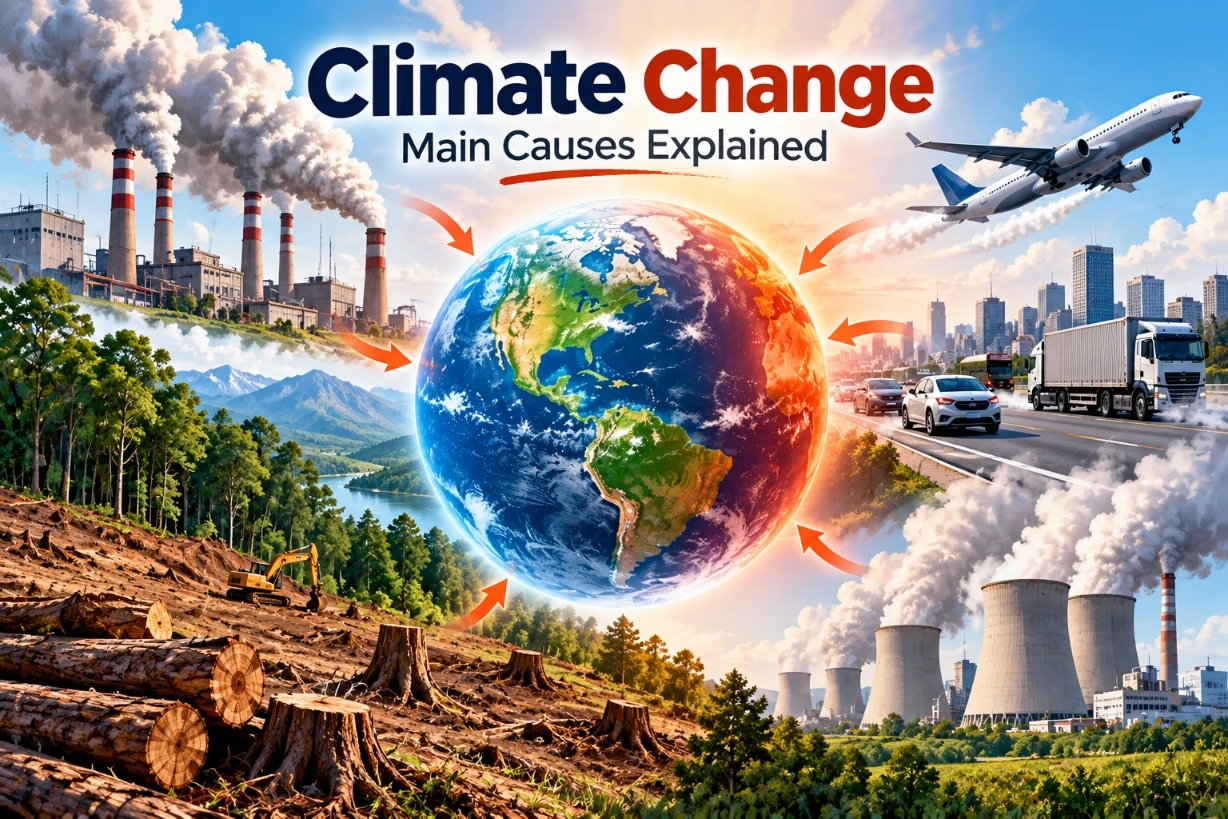
Climate change is mainly caused by humans burning fossil fuels like coal, oil, and gas, which releases greenhouse gases that trap heat in the atmosphere. Deforestation, industrial farming, and waste also add to the problem, while natural factors play a much smaller role today.
When people ask what causes climate change, they are usually not just asking for a list of science terms. They are asking why seasons feel different than they remember, why wildfires, floods, or heat waves seem more intense, and what part human activity actually plays. I want to walk you through those main factors in plain language, so you can see the full picture without needing a science degree.
What Causes Climate Change: The Big Picture Explained Simply
At its core, what causes climate change comes down to one main thing: the balance of energy on Earth has shifted. The planet gets energy from the sun and loses energy back to space. When certain gases in the air trap more of that heat, Earth warms. Those gases are called greenhouse gases, and humans are increasing their levels very quickly.
The natural greenhouse effect is not a bad thing. Without it, Earth would be too cold for most life we know. The trouble starts when that effect gets stronger than normal, like throwing an extra thick blanket over the planet. That is what is happening now, mainly because of human actions since the Industrial Revolution.
So when you hear experts talk about what causes climate change, they are really talking about how human activity is changing the amount of greenhouse gases in the atmosphere and how fast those changes are happening.
Main Human Causes Of Climate Change
Most modern climate change is driven by human behavior. I will break down the main sources, so you can see which activities matter most and how they connect.
Burning Fossil Fuels: The Number One Driver
The biggest answer to what causes climate change is simple: burning fossil fuels. Coal, oil, and natural gas are used to power cars, trucks, ships, planes, electric power plants, factories, and many buildings. When they burn, they release carbon dioxide, usually shortened to CO2.
CO2 is the most important long-lived greenhouse gas we add to the atmosphere. It does not vanish quickly. A big share of the CO2 we release today will still be in the air decades from now, and some of it will stay for centuries. That means our choices stick around and slowly add up.
Here are the main ways burning fossil fuels feeds what causes climate change:
- Power plants that burn coal or gas to make electricity
- Cars, trucks, buses, ships, and planes using gasoline, diesel, or jet fuel
- Factories and heavy industry using fossil fuels for heat and energy
- Home and building heating systems running on oil or natural gas
When I think about my own life, I see fossil fuels in the background of almost everything: the lights in my home, the food shipped to my store, the plane that takes me to another city. All of those systems together explain a huge part of what causes climate change.
Deforestation: Cutting Down The Planet’s Lungs
Trees matter a lot for climate. They pull CO2 out of the air and store it in the wood, roots, and soil. Forests are like a giant natural storage bank for carbon. When forests are cut down, two climate problems show up at once.
First, when trees are burned or left to rot, the carbon stored in them goes back into the air as CO2. Second, there are now fewer trees to pull in future CO2 from the atmosphere. So deforestation both adds new CO2 and removes the planet’s ability to clean it up later.
Often forests are cleared for farming, livestock grazing, or development. Regions with rapid deforestation, like parts of the Amazon, Southeast Asia, and central Africa, are major examples used in climate science when explaining what causes climate change beyond just fossil fuels.
Agriculture And Livestock: Methane And Nitrous Oxide
When I talk with people about what causes climate change, many are surprised to learn how big a role food and farming play. Agriculture does not only release CO2. It also releases two other powerful greenhouse gases: methane and nitrous oxide.
Methane (CH4) is a strong greenhouse gas, much more potent than CO2 over shorter time periods. It comes from:
- Cows and other ruminant animals that burp methane as they digest food
- Rice paddies, where flooded fields create low-oxygen conditions that form methane
- Leaks from natural gas systems, landfills, and some industrial processes
Nitrous oxide (N2O) comes mainly from nitrogen-based fertilizers. When too much fertilizer is used, or when it is applied at the wrong time, soil microbes turn some of that nitrogen into nitrous oxide that escapes into the air.
So, what causes climate change is not just fuel in your car or coal in a plant. It also lives in how we manage fields, what we eat for dinner, and how we treat animal waste and fertilizers.
Industrial Processes And Cement Production
Some industrial activities release greenhouse gases even when no fuel is burned. A key example is cement production. To make cement, limestone is heated, and that process itself releases large amounts of CO2. Cement is used in buildings, roads, bridges, and almost all modern infrastructure, so its climate impact is wide-reaching.
Other industrial processes create special greenhouse gases like fluorinated gases (often used in refrigerants and some manufacturing). These gases can be thousands of times more powerful per molecule than CO2. Even small leaks from cooling systems or factories can be important in the larger story of what causes climate change.
Waste And Landfills
Trash might seem like a small issue compared to power plants, but waste management still plays a role. When organic waste, like food scraps or yard trimmings, breaks down in landfills without oxygen, it creates methane. Poorly managed landfills can become strong local sources of this gas.
Open burning of waste in some regions adds both CO2 and other pollutants to the air. Good waste practices and recycling do not just reduce mess. They also chip away at the complicated web of what causes climate change.
Key Greenhouse Gases Driving Climate Change
To really understand what causes climate change, it helps to know the main greenhouse gases and what makes each one important.
Carbon Dioxide (CO2)
CO2 gets most of the focus for a simple reason: it makes up the largest share of human-caused greenhouse gas emissions. It comes mainly from burning fossil fuels and from deforestation. CO2 is long-lived, meaning levels build over time as we keep adding more.
Even though CO2 is not as strong per molecule as some other gases, the huge volume we emit makes it the top driver of global warming overall.
Methane (CH4)
Methane is powerful but shorter-lived in the atmosphere. It comes from livestock, rice fields, landfills, fossil fuel extraction, and natural wetlands. Over 20 years, methane traps many times more heat than the same amount of CO2.
That is why efforts to cut methane are seen as a fast way to slow some near-term warming. In the question of what causes climate change now and in the next few decades, methane cuts can give quick benefits.
Nitrous Oxide (N2O)
Nitrous oxide has both farming and industrial sources. It is released from overused or poorly managed fertilizers, some industrial processes, and even from some types of combustion. Like methane, it is much more potent than CO2, and it also stays in the atmosphere for a long time.
Fluorinated Gases
These are man-made gases used in refrigeration, air conditioning, some industrial processes, and older types of aerosols. They can be thousands of times stronger than CO2 per molecule. Their overall share of warming is smaller because we use much less of them, but they matter a lot for certain sectors.
Natural Factors And Why They Are Not The Main Cause Today
Whenever I talk about what causes climate change, someone usually asks about natural factors like volcanoes or changes in the sun. Those do affect climate, but they cannot explain the recent rapid warming we are seeing now.
Volcanic Eruptions
Large volcanoes can cool the planet for a short time. They send tiny particles high into the atmosphere that block some sunlight. This cooling usually lasts a few years, then fades as the particles fall out. Volcanoes also release CO2, but compared to human emissions, that amount is much smaller each year.
Changes In The Sun’s Energy
The sun’s output does vary a bit over time. These changes can nudge the climate slightly warmer or cooler. But careful measurements of solar activity show that recent warming is not explained by changes in the sun. In fact, the pattern of warming (more at night, more in winter, more near the poles) matches greenhouse gas effects much better than changes in sunlight alone.
Natural Climate Cycles
Earth has natural climate swings, such as El Niño and La Niña, which move heat between the ocean and the air. These shape year-to-year weather patterns and can make some years hotter or cooler. But they sit on top of a long-term warming trend caused by rising greenhouse gases.
So when I answer what causes climate change today, I focus on human factors not because nature stopped mattering, but because the pace and pattern of current warming line up with the rapid rise in greenhouse gases from human activity.
How Human Activities Change The Planet’s Energy Balance
If you like to think in pictures, imagine Earth as a house with windows and a heater. The sun is the heater. The windows are the atmosphere. Greenhouse gases act like thicker window glass that holds more heat inside the house.
Here is how human actions lead to warming:
- We add more greenhouse gases from burning fossil fuels and cutting forests.
- The thicker “glass” traps more of the sun’s heat inside the Earth system.
- Less heat escapes to space, so the planet slowly warms.
This extra trapped heat does not just make air temperatures rise. It also warms oceans, melts ice, changes rainfall patterns, and feeds more extreme weather events. These impacts are why people care so much about what causes climate change in the first place.
Feedback Loops That Make Warming Worse
One of the most worrying things about climate change is that some effects of warming actually lead to even more warming. These are called feedback loops, and they help explain why what causes climate change today can have larger impacts later.
Melting Ice And Loss Of Reflective Surfaces
Ice and snow reflect sunlight back to space, like a giant mirror. When they melt, darker land or ocean water takes their place, which absorbs more heat. That extra heat causes even more ice to melt. This loop speeds up warming in polar regions.
Thawing Permafrost
Permafrost is frozen ground found in cold regions. It stores large amounts of ancient plant material locked away in the frozen soil. As the climate warms, permafrost starts to thaw and release CO2 and methane. Those gases add more fuel to what causes climate change, which then leads to more thawing in the future.
Hotter, Drier Conditions And Wildfires
Warmer temperatures can dry out forests and grasslands, making wildfires more likely and more intense. When forests burn, they release CO2 and lose their ability to store carbon. This again adds more greenhouse gases to the air, feeding the cycle further.
Why Scientists Are Confident About Human-Caused Climate Change
People often ask how sure experts are about what causes climate change. The short answer is: very sure. This is not based on one model or one study. It is based on multiple lines of evidence that all point in the same direction.
Here are a few reasons for that strong confidence:
- We have direct measurements of rising greenhouse gas levels from the mid-1900s to now.
- We know how much coal, oil, and gas we burn, and those numbers match the rise in CO2.
- We see the warming pattern expected from greenhouse gases, not from solar changes alone.
- Climate models that include human emissions match observed warming much better than those that only include natural factors.
When all these pieces are put together, the picture of what causes climate change becomes very clear: human actions are the dominant driver of the rapid warming seen over the last century, especially since the late 1900s.
Why Knowing The Causes Matters For Real Life Decisions
Knowing what causes climate change is not just an academic question. It shapes everyday choices and big policy decisions. If climate change were mostly natural, our options would be more limited. But because human actions are a major cause, human solutions are also possible.
Here are a few ways this knowledge connects to real life:
- Energy choices: shifting from coal, oil, and gas to cleaner sources reduces the main cause of warming.
- Land use: protecting forests and restoring damaged land helps store more carbon.
- Food systems: changing farming practices, cutting food waste, and adjusting diets can lower methane and nitrous oxide.
- Product design: better refrigerants and less-leaky systems cut fluorinated gases.
When I think about what causes climate change, I also think about what gives us leverage. Each cause hints at a potential solution: cleaner power, smarter farming, better forests, and more efficient industry and transport.
Common Myths About What Causes Climate Change
There is a lot of noise around this topic, so I want to clear up a few myths I see often.
“Climate Has Always Changed, So This Is Normal”
It is true that Earth’s climate has changed in the past. But past shifts usually happened over thousands or millions of years, often tied to slow changes in Earth’s orbit or major events like long-lasting volcanic activity. The warming of the last century is far faster and matches the timing and size of human greenhouse gas emissions.
“Volcanoes Emit More CO2 Than Humans”
This is not supported by data. Human emissions from burning fossil fuels and land use changes are much larger each year than volcanic CO2 output. Volcanoes do affect climate, but mostly through short-term cooling from particles, not long-term warming from CO2.
“The Sun Is Getting Hotter”
If recent warming were mainly from the sun, we would see different patterns in the atmosphere, including more warming higher up. But measurements show the lower atmosphere warming while the upper atmosphere cools. That is a hallmark of stronger greenhouse gas trapping, not an increase in solar output.
Pulling It Together: The Main Factors Behind Climate Change
When I sum up what causes climate change in the clearest way I can, it comes down to this: human activity has added large amounts of greenhouse gases to the atmosphere by burning fossil fuels, cutting forests, changing land use, running energy-hungry industries, managing waste poorly, and farming in ways that release methane and nitrous oxide.
Natural factors still shape the background of Earth’s climate, but the rapid warming we see now sits on top of those natural rhythms and pushes them into new territory. The same human choices that created the problem can also guide the response, from cleaner energy to better land management.
If you remember just one thing, let it be this: what causes climate change is not a mystery hidden behind complex formulas. It is closely tied to everyday systems we built and rely on. That also means we are not helpless. By changing those systems, step by step, we can reduce the forces that are heating the planet and protect more of what we care about.