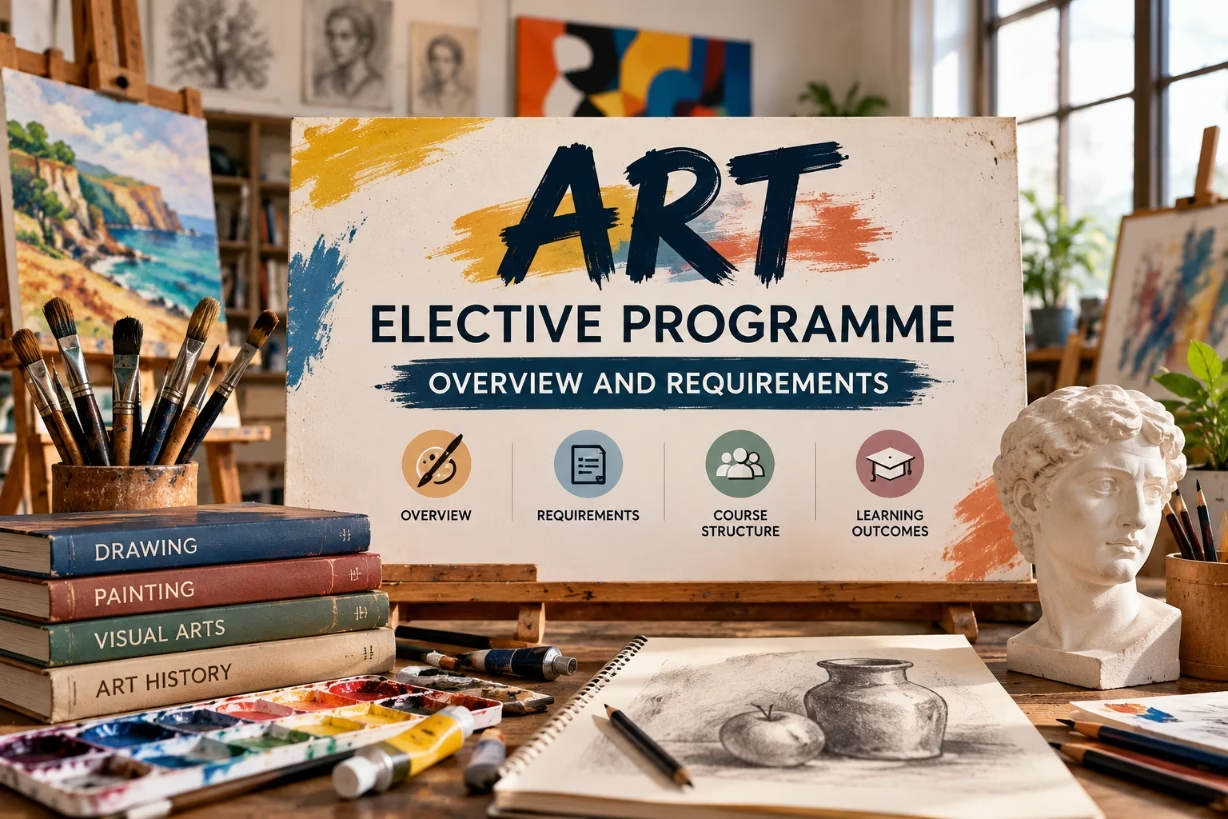
Art elective programme options give students structured art training, clear entry requirements, and a guided path to grow skills in drawing, painting, design, and visual communication, often leading to stronger portfolios, higher academic engagement, and possible pathways into creative courses and careers.
What I Mean By An Art Elective Programme
When I talk about an art elective programme, I mean a planned set of art classes that students choose in addition to their core subjects like math, science, and language. It is not just a casual hobby class. It is a track with clear goals, assessment, and progression from basic to advanced skills.
Most schools and colleges build an art elective programme to give students serious time to work with drawing, painting, sculpture, digital art, photography, or design. It usually runs over at least one school year, sometimes more, and includes graded projects, theory work, and studio practice.
I like to think of an art elective programme as a bridge. On one side, you have simple interest and curiosity. On the other side, you have a real portfolio, technical skill, and visual thinking that can support college applications, creative jobs, and personal growth. This bridge is especially helpful for students who feel more alive when they create images, objects, or visual stories, but who are not sure how to turn that energy into something structured.
Who An Art Elective Programme Is For
A lot of students ask me if an art elective programme is only for those who are already “good at art.” My honest answer is no. It helps if you already enjoy drawing or design, but you do not need perfect skills from day one. What matters more is patience, curiosity, and a willingness to practice regularly.
There are a few types of students who usually gain the most from this kind of programme:
First, there are the obvious art lovers, the ones who doodle in the margins, follow artists online, or spend weekends sketching or making edits. For them, an art elective programme finally gives structure, feedback, and a community around their passion.
Second, there are students who want to apply for creative courses later, such as architecture, product design, illustration, game art, or animation. For them, the art elective programme becomes the main way to build a strong portfolio and to get used to deadlines, critiques, and project planning.
Third, there are students who may not see themselves as “artists” at all, but who feel stressed or boxed in by purely academic subjects. The programme offers a different way of thinking, where mistakes are part of the process and ideas matter as much as facts. I have watched quiet students become more confident and expressive after a year in an art elective programme, even if they do not choose an art career later.
Typical Structure Of An Art Elective Programme
The exact design of an art elective programme changes from school to school, but there are some common parts that you can usually expect to see. Knowing this structure helps you understand the requirements and prepare in advance.
Core Studio Components
At the heart of any strong art elective programme, you will find studio practice. Studio work means hands-on making, not just reading about art. The main studio components often include:
Drawing and observation, where you learn to see and record shapes, light, and space. Painting, where you deal with color mixing, brush control, and composition. Design tasks, which involve planning layouts, logos, posters, or simple visual identities. Some programmes also include sculpture, ceramics, photography, film, or digital illustration. The goal is not to cover everything in the art world, but to give you enough range so you can discover what you like and where you show natural strength.
Theory, History, And Visual Literacy
A strong art elective programme never focuses only on technique. You also need to understand why people create art, how images affect our feelings, and how artists from different cultures and times solve visual problems. This is where art history and visual literacy modules come in.
Students may study key movements like Renaissance painting, Impressionism, modernism, and contemporary art. They also learn basic terms such as perspective, contrast, balance, rhythm, and symbolism. The idea is not to memorize dates, but to train your eye and mind. I have seen students start noticing posters in the subway, book covers in stores, and even packaging design in a more critical way after taking part in an art elective programme with a good theory section.
Projects, Portfolios, And Exhibitions
Most art elective programme setups are project based. You may have short tasks that last one or two weeks, and longer projects that stretch over months. These projects lead to a final portfolio, which is a collection of your best works, supported by sketches, notes, and reflections.
Some schools close the year with a student exhibition, where selected works from the art elective programme are shown to families, teachers, or even the public. This can be stressful, but it also gives students a real sense of completion and pride. It feels different to see your painting on a clean wall with proper lighting, compared to just keeping it in a folder at home.
Entry Requirements For An Art Elective Programme
Now let me go through what schools usually look for when they select students for an art elective programme. Requirements vary, but there are key patterns you can prepare for.
Age And Grade Level
Many programmes in schools start around middle school or early high school. Some begin at grade 7 or 8, others at grade 9 or 10. Colleges may offer their own art elective programme tracks for undergraduates from different majors who want structured art study without switching to a full art degree. Always check your school’s grade rules, because the level of expectation rises with age.
Portfolio Or Practical Test
Some schools ask you to submit a small portfolio to join their art elective programme. A typical entry portfolio might include 5 to 10 works. These can be drawings from observation, imaginative pieces, and maybe one or two digital works if you have them. The teachers are not looking for perfection. They look for effort, variety, and honest interest.
Other schools skip the portfolio and instead hold a short practical test or workshop. You might be given a still life to draw in pencil for an hour, or a simple design problem to solve on paper. I like this method because it reduces pressure on those who have not had many chances to take formal art classes before applying.
Academic Standing And Attitude
Even though an art elective programme centers on creative work, your general academic record still matters. Schools need to know you can handle your main subjects while also committing time and energy to art assignments. You do not need straight A grades, but teachers often check that you pass your core classes and show basic responsibility.
Attitude is just as crucial. Teachers pay attention to punctuality, respect for shared studio spaces, and openness to feedback. During selection, some schools will ask a short written statement where you explain why you want the art elective programme and what you hope to learn. This is your chance to show sincerity and motivation, not to show off big words.
Core Skills You Will Develop
One reason I support choosing an art elective programme is that the skills you gain are not only “art skills.” They also help in life, work, and other subjects. Let me walk through a few of these skills in clear terms.
Observation And Patience
Drawing an object accurately forces you to slow down. You start seeing small changes in light, tilt, and proportion that most people miss. Over time, this careful looking becomes a habit that you carry into science labs, writing tasks, or even social situations. Many students tell me that the discipline of studio work in their art elective programme helps them sit longer with math problems or long reading passages too.
Visual Communication
In an image based world, the ability to think in pictures is powerful. Through the art elective programme, you learn how color, shape, line, and layout send messages. You practice turning abstract ideas, such as “calm,” “speed,” or “tension,” into visual forms. This skill feeds directly into marketing, UI design, architecture, teaching, and more.
Creative Problem Solving
Every assignment in an art elective programme is a kind of puzzle. You deal with limited materials, time, or rules, and you must still produce something meaningful. You experiment, fail, adjust, and try again. This pattern builds a quiet kind of courage. You stop seeing mistakes as shameful and see them as data that guides you forward.
Portfolio Building And Documentation
By the end of a serious art elective programme, you should have a portfolio strong enough to support applications for extended art study or creative opportunities. Along the way, you also learn to photograph your work well, organize files, label pieces, and write short reflective notes. These habits prepare you for the application process to design schools, scholarships, or even freelance platforms later on.
Common Subjects Inside An Art Elective Programme
Let me break down some typical subject areas you might find on the syllabus of an art elective programme. Not every school offers all of these, but you are likely to see a mix.
Drawing And Painting
This is the backbone of most programmes. You practice line control, tone, shading, perspective, and composition. As you grow, you move into color theory, blending, glazing, and the use of different tools like charcoal, ink, or acrylic paint. A good art elective programme keeps revisiting drawing and painting at deeper levels, since they support almost every other visual field.
Printmaking And Mixed Media
Some programmes introduce simple printmaking methods such as linocut, monoprint, or screen print. These areas train you to think in layers and positive/negative shapes. Mixed media units might ask you to combine collage, text, found objects, or recycled materials. These projects are often where students with less confidence in drawing find fresh ways to express ideas.
Digital Art And Photography
An art elective programme today almost always includes some digital component. This may involve photo editing, basic illustration software, or layout design tools. You learn file formats, resolution, and basic digital workflows. Photography units may cover framing, lighting, depth of field, and simple editing. Even if you prefer traditional media, exposure to digital art skills opens doors for later work in media, marketing, games, and film.
3D Work: Sculpture And Design Objects
Working in three dimensions develops spatial awareness. In some art elective programme tracks, students handle clay, cardboard, wire, wood, or found materials to create objects and small installations. Assignments might include model buildings, masks, abstract forms, or functional items. Learning how an object looks from every angle helps a lot if you later choose architecture or product design.
Assessment And Grading In An Art Elective Programme
One thing that can scare students is the question of grading. How can teachers grade something as personal as art? In a well run art elective programme, assessment is based on clear criteria, not on taste alone.
Teachers usually look at effort, progress, creativity, technical control, and reflection. They consider how well you followed the brief, how many ideas you tested, and how your final work connects to those early experiments. Many programmes also include self assessment or peer feedback sessions. You get used to talking about your own work in simple, honest words, without tearing yourself down.
Written reflections can feel strange at first, but they are essential. After a project, you might write a short piece about what worked, what did not, and what you would try next time. This builds metacognition, the ability to watch your own thinking and improve it. In my view, this is one of the quiet superpowers that an art elective programme gives you.
Time Commitment And Workload Expectations
Let me be direct here. An art elective programme takes time. You cannot rely only on the hours inside the classroom. Most students need extra practice after school or on weekends, especially before major submissions or exhibitions.
On average, you may spend two to four hours per week in class, plus another two to four hours outside class. This can increase around deadlines. Managing this workload means planning ahead and breaking big projects into smaller steps: research, sketches, trials, main piece, finishing, and documentation.
If you already have sports, music, or other heavy commitments, talk with your family and teachers before you sign up. The goal is not to overload you, but to help you find a rhythm that lets the art elective programme strengthen you rather than exhaust you.
Benefits Beyond Art School Applications
It is true that many students use an art elective programme to prepare for specialized courses in fine art, animation, architecture, or design. But even if you end up in law, medicine, engineering, or business, the benefits still travel with you.
Through regular critique, you get used to feedback, even when it is sharp. That is a core skill in any career. Through project management, you learn to pace long term tasks. Through group projects, installations, or shared studio cleaning, you practice collaboration and respect for shared resources.
Most of all, you keep a part of your life open for imagination and reflection. When life becomes busy and practical, the habits you build in an art elective programme give you a way to process emotion and stress without only using words. Many adults later tell me they wish they had taken such a programme when they were younger, just to build that creative muscle early.
How To Decide If An Art Elective Programme Fits You
If you are unsure whether to apply, I suggest asking yourself a few simple questions and answering them honestly.
Do you often feel pulled toward drawing, pictures, or design, even when no one is asking you to do it? When you are tired or upset, does doodling, painting, or editing photos help you calm down? Are you curious about how logos, posters, games, or films are made behind the scenes? If you answered yes to at least one of these, then an art elective programme is likely to give you both joy and growth.
Next, think about your schedule and support system. Are your parents or guardians open to the idea? Can you drop one other activity if your time gets too tight? The art elective programme will reward your commitment, but it cannot remove other duties from your life. Planning ahead keeps you from burning out.
Finally, visit any exhibition or open house your school offers. Look at current students’ work in the art elective programme. Ask them about their daily routine, favorite assignments, and biggest struggles. Their answers will give you a real picture that is worth more than any brochure.
Practical Steps To Get Ready For Application
If you decide you want to join an art elective programme, there are a few simple steps you can take to prepare, even months before the official date.
Start by drawing more from life. Pick simple objects at home, like cups, shoes, or plants, and sketch them in different angles. Do not focus on style yet. Focus on seeing honestly. Keep a small sketchbook so you can draw on the bus, in parks, or between classes.
If you enjoy digital art, organize your files by date and project so you can find them easily when you need to build a portfolio. Learn basic editing tools and make sure your images are saved in standard formats.
Visit galleries, museums, or even public murals in your city. Stand in front of real artworks, not just phone screens. Notice how big pieces feel different from small ones. Notice how colors change in real light. This quiet fieldwork feeds your mind and gives depth to your future projects in the art elective programme.
When the application opens, read the instructions slowly. If they ask for 8 works, do not send 20. If they want at least two drawings from observation, respect that. Show variety, but still keep your strongest pieces at the center.
Final Thoughts On Choosing An Art Elective Programme
At the end of the day, an art elective programme is a choice to take your creative side seriously. It asks for time, effort, and courage, but it also offers you a structure where your visual ideas are treated with respect. Over one or two years, you can move from scattered sketches to a clear, confident body of work that reflects who you are and how you see the world.
If you feel that quiet pull toward images, design, or color, I encourage you to look closely at the art elective programme options near you. Ask questions, study the requirements, and imagine yourself in that studio space. With steady work, the skills you gain there will stay with you far beyond the classroom, shaping how you think, feel, and communicate in every part of your life.