
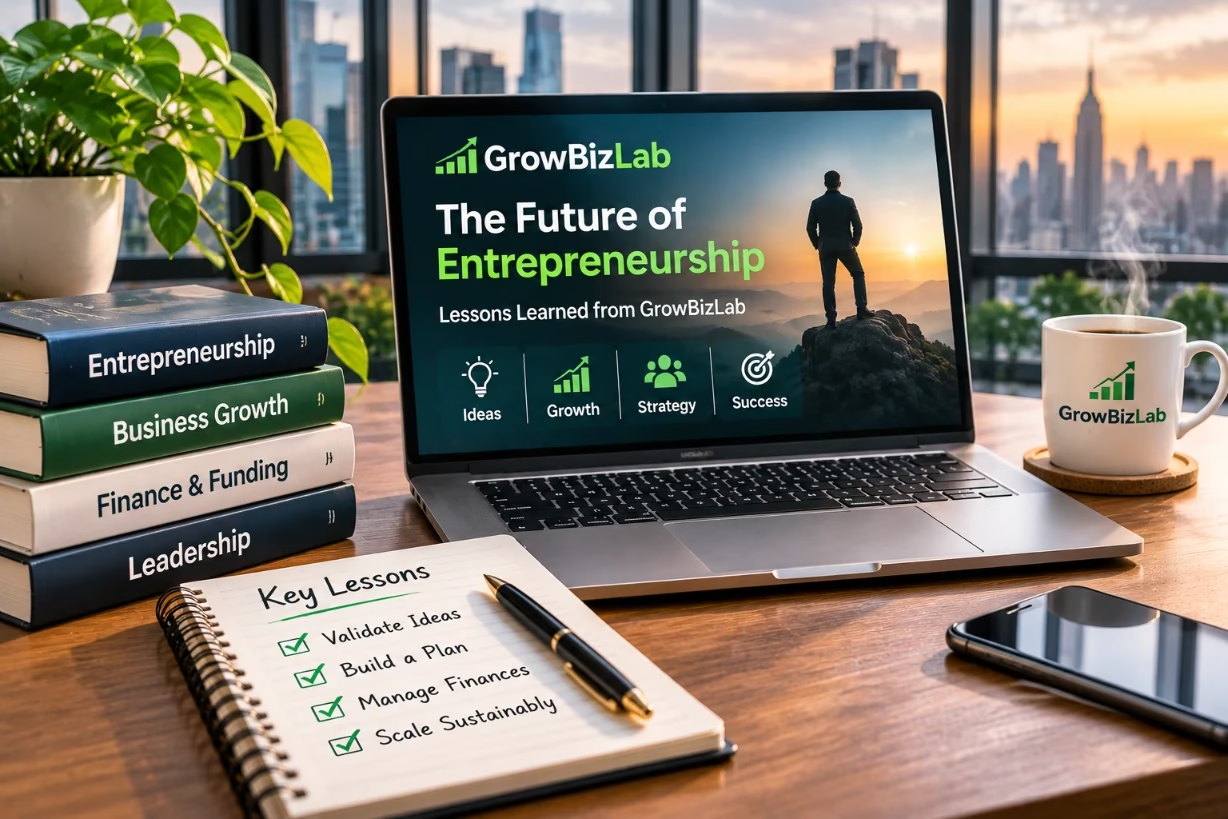
Entrepreneurship continues to transform the global business landscape. New technologies, changing markets, and customer expectations create fresh opportunities. However, building a successful business requires more than an innovative idea. Entrepreneurs must develop strong strategies, embrace change, and make informed decisions. GrowBizLab highlights valuable lessons that help businesses navigate this evolving environment. Moreover, its entrepreneurial insights encourage founders to build sustainable and competitive ventures.
Understanding the Future of Entrepreneurship
The future of entrepreneurship will depend on innovation, adaptability, and strategic thinking. Traditional business models are changing rapidly. Consequently, entrepreneurs must recognize emerging trends and respond effectively.
Digital transformation has become essential for modern businesses. Companies increasingly use artificial intelligence, automation, and digital marketing. These technologies improve efficiency and strengthen customer relationships.
Furthermore, entrepreneurs must understand their target audiences. Customers now expect personalized experiences and convenient solutions. Businesses that meet these expectations can build stronger relationships. Therefore, understanding customer behavior remains a valuable competitive advantage.
Innovation Is the Foundation of Business Growth
One important lesson from GrowBizLab involves the importance of continuous innovation. Successful entrepreneurs never stop improving their products or services. Instead, they explore better ways to solve customer problems.
Innovation does not always require groundbreaking technology. Sometimes, small improvements create significant business opportunities. For example, simplifying an ordering process can improve customer satisfaction.
Additionally, businesses should encourage creative thinking among their teams. Employees often identify opportunities that management might overlook. An innovative workplace also supports collaboration and productivity.
Entrepreneurs should regularly evaluate their existing strategies. They must identify weaknesses and explore new solutions. As a result, businesses can remain relevant in competitive markets.
Adaptability Helps Entrepreneurs Overcome Challenges
Every business experiences unexpected challenges. Economic changes, customer preferences, and industry competition can affect performance. Therefore, adaptability remains essential for long-term success.
GrowBizLab’s entrepreneurial lessons emphasize the importance of responding positively to change. Successful founders understand that initial plans may require adjustments. Rather than resisting change, they use challenges as learning opportunities.
Moreover, adaptable entrepreneurs monitor industry developments. They analyze competitors and evaluate changing market conditions. This approach helps them make smarter business decisions.
Flexibility also improves business resilience. Companies with adaptable strategies can recover faster from setbacks. Consequently, they become better prepared for future uncertainties.
Technology Is Reshaping Modern Business Opportunities
Technology continues to create opportunities for entrepreneurs across industries. Digital platforms allow startups to reach wider audiences. Meanwhile, automation helps businesses manage repetitive activities.
Artificial intelligence is another important development. Entrepreneurs can use AI tools for research, customer support, and content creation. These applications save time and improve operational efficiency.
Similarly, e-commerce has simplified the process of launching businesses. Entrepreneurs can sell products without maintaining traditional physical stores. Digital payment systems also make transactions more convenient.
However, technology alone cannot guarantee success. Businesses must choose tools that support their objectives. Therefore, entrepreneurs should prioritize practical solutions over unnecessary technological investments.
Building Strong Customer Relationships
Customer relationships play an important role in business sustainability. A successful company understands its customers’ needs and expectations. Furthermore, it consistently delivers value through its products and services.
Entrepreneurs should prioritize communication and customer feedback. Reviews, surveys, and direct conversations provide useful insights. These insights help businesses improve their offerings.
Additionally, personalized experiences can strengthen customer loyalty. Customers appreciate brands that understand their preferences. Therefore, businesses should develop meaningful engagement strategies.
GrowBizLab’s entrepreneurial approach highlights the importance of creating customer-focused businesses. Long-term relationships often generate repeat purchases and positive recommendations. Ultimately, customer satisfaction supports sustainable growth.
Financial Planning and Smart Business Decisions
Financial management remains one of entrepreneurship’s most important responsibilities. Even promising businesses can struggle without proper financial planning. Therefore, entrepreneurs must understand their income, expenses, and investments.
A realistic budget helps founders manage available resources. It also prevents unnecessary spending. Moreover, maintaining emergency funds provides additional financial security.
Entrepreneurs should monitor cash flow regularly. They must understand when money enters and leaves their businesses. This practice helps prevent financial difficulties.
Smart investment decisions also support business expansion. However, founders should evaluate risks before committing resources. Careful planning creates stronger financial foundations.
Leadership and Teamwork Drive Sustainable Success
Strong leadership helps businesses achieve their long-term objectives. Entrepreneurs must communicate clear goals and establish realistic expectations. Additionally, effective leaders encourage accountability and collaboration.
Building the right team is equally important. Skilled employees contribute valuable knowledge and practical experience. Consequently, businesses can complete projects more efficiently.
Great leaders also invest in professional development. Training opportunities improve employee performance and confidence. Furthermore, supportive workplaces encourage innovation and creativity.
Entrepreneurs should recognize their team’s contributions. Appreciation improves motivation and workplace relationships. Therefore, effective leadership benefits both employees and business performance.
Learning from Failure and Embracing Continuous Improvement
Failure is a natural part of entrepreneurship. Even experienced business owners encounter disappointing results. However, successful entrepreneurs treat setbacks as valuable learning experiences.
Instead of giving up, they analyze their mistakes. They identify weaknesses and develop better strategies. This approach turns difficult experiences into opportunities for improvement.
Continuous learning also helps entrepreneurs remain competitive. Business owners should explore industry research, professional communities, and educational resources. They can also browse around this site to discover additional business insights and entrepreneurial guidance.
Furthermore, networking provides opportunities to exchange knowledge. Conversations with experienced professionals can reveal practical solutions. These connections may also create valuable business partnerships.
Conclusion: Preparing for the Future of Entrepreneurship
The future of entrepreneurship belongs to businesses that embrace innovation and adaptability. GrowBizLab offers valuable lessons for entrepreneurs seeking sustainable growth. These lessons highlight customer satisfaction, financial planning, technology, and effective leadership.
However, success requires consistent effort and strategic thinking. Entrepreneurs must remain curious and willing to improve. They should also learn from challenges and changing market conditions.
Ultimately, building a successful business requires patience, resilience, and determination. By applying these principles, entrepreneurs can create stronger companies. More importantly, they can prepare their businesses for future opportunities and long-term success.