
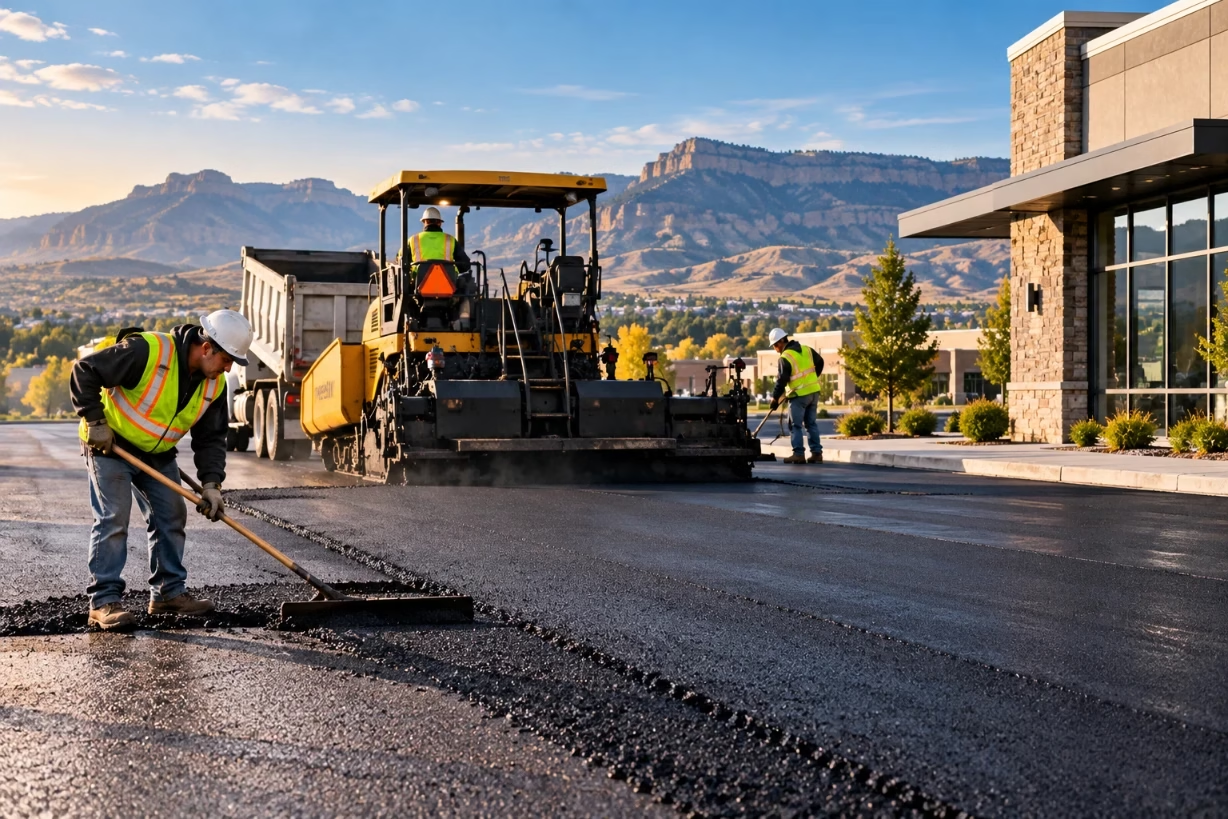
For commercial asphalt paving Billings MT contractors, I focus on durable pavements, clear timelines, and honest pricing so your parking lot, driveway, or access road looks good, drains right, and lasts in Montana weather without constant patch jobs.
Why Commercial Asphalt Paving Billings MT Matters More Than You Think
When I talk with business owners about commercial asphalt paving Billings MT projects, the first thing I ask is simple: what do you want customers to feel when they pull in? A parking lot or access road is usually the first thing people touch on your property with their tires and their feet. If it is rough, cracked, or full of potholes, it sends a message long before anyone sees your front door.
In Billings, commercial asphalt has to handle freezing winters, hot summers, heavy trucks, and steady daily traffic. That mix is hard on pavement. If the asphalt design, base prep, and drainage are not right, you will see cracks, standing water, and ruts a lot faster than you should. That is why choosing the right commercial asphalt paving Billings MT contractor matters more than grabbing the lowest bid and hoping for the best.
Good commercial paving is not just about looks. It affects safety, liability risk, and even operations. Delivery trucks need solid turning areas. Customers and staff need smooth, ice-manageable surfaces. Emergency vehicles need clear access. All of that comes back to how well your asphalt was planned, installed, and maintained.
How Montana Climate Affects Commercial Asphalt Paving In Billings
Billings has its own mix of weather that makes commercial asphalt paving Billings MT different from many other places. I keep three local factors in mind whenever I look at a project.
Freeze-thaw cycles and subgrade movement
The temperature in Billings can swing from below zero in winter to hot in summer. Water gets into tiny cracks, freezes, expands, then melts. That cycle repeats over and over. If the base under your asphalt is not compacted and drained correctly, those freeze-thaw cycles will push and pull on the pavement. You see this as alligator cracking, potholes, and dips.
That is why I pay close attention to soil type, moisture, and compaction levels before I ever think about laying asphalt. A strong subgrade is like a strong foundation under a building. Without it, even the best commercial asphalt paving Billings MT mix will not last.
Heavy trucks and equipment loads
Many Billings properties see heavy axle loads. Think semi deliveries, farm and ranch equipment, fuel trucks, garbage trucks, or construction gear. If the asphalt thickness and base depth are not designed for that, the surface will rut and crack fast, especially in the heat.
So, for loading zones, drive lanes, dumpster pads, and fuel station areas, I consider thicker asphalt layers, stronger aggregate base, or sometimes concrete pads blended into an otherwise asphalt site. Good contractors in commercial asphalt paving Billings MT should always ask about your heaviest vehicles and traffic patterns.
Drainage and snow management
Snow plowing, sanding, and de-icing put extra stress on commercial pavement. If water does not drain away properly, it will sit, soak, freeze, and chew up your asphalt from the top and the bottom. A smart paving plan for Billings properties shapes the lot with enough slope and installs inlets or swales so meltwater moves where it should go.
When I design a commercial asphalt paving Billings MT project, I also think about where snow piles will go, how plows will turn, and where the lot may see the most sanding. These small planning choices add years of life to the surface.
Types Of Commercial Properties That Need Quality Asphalt In Billings
Almost every type of property around Billings touches asphalt in some way. Here are the most common places I see the need for reliable commercial asphalt paving Billings MT work.
Retail centers and strip malls
For shopping centers, the parking lot is part of the storefront. Customers judge safety and care before they ever walk inside. Faded striping, broken curbs, and rough surfaces can quietly push people away or cause trips and falls. I focus on good traffic flow, clear crosswalks, ADA-compliant accessible spaces, and loading areas that stand up to delivery trucks.
Medical offices, clinics, and senior care facilities
These sites see people using walkers, wheelchairs, and canes every day. Smooth surfaces, proper slopes, proper ramps, and safe, visible markings are non-negotiable. Commercial asphalt paving Billings MT for medical properties needs tight attention to Americans with Disabilities Act guidelines and local rules for access and parking counts.
Industrial yards and warehouses
Warehouse and industrial traffic is rough on pavement. Forklifts, loaded semi-trailers, and heavy storage can punish weak spots. For these sites, I usually recommend stronger base layers, thicker asphalt, and sometimes reinforcement in turning areas. Good design here can cut downtime due to repairs and keep trucks moving.
Schools, churches, and community spaces
These properties often watch their budgets closely, but they still want safe, tidy lots. Kids run, bikes roll, and families cross the pavement together. When I guide commercial asphalt paving Billings MT projects for these sites, I try to balance cost with long-term durability, often suggesting phased repairs and regular sealcoating so budgets stretch further.
Hotels, motels, and hospitality sites
First impressions are huge in hospitality. A smooth, clean drive and well-marked parking helps guests feel welcome and safe at any hour. For these projects, lighting locations, striping layout, and drop-off lanes matter almost as much as the asphalt itself.
Key Steps In A Commercial Asphalt Paving Project In Billings
Even though every property is different, most commercial asphalt paving Billings MT projects follow a predictable set of steps. When you know the process, it is easier to ask intelligent questions and compare contractors.
1. Site evaluation and planning
I always start by walking the site and listening. How many cars and trucks use the space daily? Where does water currently stand after a storm? Are there underground utilities, manholes, or drainage structures? What soils are present and how stable is the ground? These answers shape thickness, drainage, and layout decisions.
During this phase, I also look at local codes, ADA requirements, fire access routes, and any zoning or city rules that affect your pavement. A solid plan on paper makes the rest of the commercial asphalt paving Billings MT process much smoother.
2. Excavation and base preparation
After planning, it is time to remove old pavement or soil to the depth needed. The base layer, often made of crushed stone, is placed and compacted in lifts. This is where a project can be made or broken. Poor compaction, soft spots, or mixing mud with base material will come back later as cracks and dips.
In Billings, I sometimes recommend geo-textile fabric in problem soil areas to separate the base from weak ground. This extra step gives the asphalt a more stable platform, especially for heavy commercial asphalt paving Billings MT traffic.
3. Grading and drainage shaping
Once the base is in, I shape it so water flows where it should. Even small changes in slope can matter. The goal is simple: no standing water on the finished surface. That means checking grades around buildings, doors, sidewalks, and drains so runoff does not flood entryways or freeze into dangerous sheets of ice.
4. Asphalt mix selection and placement
There are many types of asphalt mixes, and not all are right for every job. For commercial asphalt paving Billings MT, I usually lean toward mixes that balance strength and flexibility. Heavy truck areas may get a stiffer, more rut-resistant mix. Low-traffic areas might use a more standard surface mix.
The asphalt should arrive hot and be laid with a paver for most commercial lots. Handwork is fine for small patches and edges, but large areas need machine placement for consistent thickness and smoothness. Then a steel drum and pneumatic roller compact the asphalt in a set sequence while it is still at the right temperature.
5. Joint work and compaction quality
Where one load of asphalt meets another, or where new pavement meets old, you get a joint. These areas are often the first to fail if not treated with care. I pay attention to how the crew handles joints, edge compaction, and rolling patterns because those details shape long-term performance more than most people realize.
6. Curing, striping, and signage
After placement, the asphalt needs time to cool and firm up. You can often drive on new pavement within a day or so, but heavy loads might be delayed slightly, depending on temperature. Next comes layout and striping. For commercial asphalt paving Billings MT lots, clean striping, arrows, crosswalks, and handicap markings organize traffic and meet legal standards.
Signs, wheel stops, and bollards finish the job. I like to walk the site again with the owner at this point and confirm that traffic flow feels intuitive and safe.
How To Choose A Reliable Commercial Asphalt Paving Billings MT Contractor
Not all contractors approach commercial work the same way. Some focus on quick turn projects, others on cost-cutting. When I help people compare options, I suggest they look at a few specific things instead of just the bottom line on the estimate.
Check commercial experience, not just residential
Commercial asphalt paving Billings MT is different from a small driveway. There are more rules, heavier loads, and usually more complex drainage. Ask for examples of past commercial jobs of similar size and use. A contractor who mostly does driveways may not be the right fit for a busy retail center or industrial yard.
Look for clear, detailed written proposals
A serious proposal should spell out:
- Thickness of asphalt and base layers
- Type of asphalt mix and number of lifts
- Work on drainage, curbs, and structures
- Timeline, traffic control plan, and phasing if needed
- Warranty terms and what they cover
If a proposal only says “pave lot” with a lump sum, it is hard to compare or hold anyone accountable later.
Ask about equipment, crew, and scheduling
A contractor who handles commercial asphalt paving Billings MT well usually has up-to-date pavers, rollers, and trucks plus a trained crew that works together regularly. Ask who will lead the job on site, how many workers will be there, and how they plan to keep your business open while work happens.
Verify insurance, licensing, and references
It is never fun to check paperwork, but it protects you. Make sure the contractor holds current liability and workers comp insurance, any required licenses, and can show references from local businesses. When possible, drive by past projects and see how the pavement looks a few years later.
Cost Factors For Commercial Asphalt Paving In Billings
People often ask me how much commercial asphalt paving Billings MT will cost per square foot. I understand the question, but I always pause before answering, because several factors shape the final number.
Site conditions and base work
If your existing base is strong and drainage is decent, costs can be lower. But if the site needs deep excavation, soft soil correction, or major grading, the price goes up. In Montana, I sometimes see sites with clay or saturated ground that require extra work before I feel comfortable putting new asphalt on top.
Thickness and mix type
Heavier traffic and truck routes need thicker sections and sometimes stronger mixes. That means more material and more compaction work. A light use parking area for passenger cars will not cost the same per square foot as a truck yard, even in the same town.
Project size, layout, and phasing
Big, open lots are usually more efficient than small, chopped-up areas with lots of handwork. If I have to phase the job heavily to keep half the lot open at all times, that can add to cost because the crew has to move more often and set up more traffic control.
Extras: curbs, drainage, and striping
New concrete curbs, catch basins, manhole adjustments, and specialty striping all affect the total. When you compare quotes for commercial asphalt paving Billings MT projects, make sure the same items are included in each one. One proposal may look cheaper simply because it left out important pieces.
Maintenance Tips To Extend The Life Of Your Asphalt
Good installation is only the first part of the story. How you care for the pavement after the crew leaves has a huge impact on how long it lasts and how good it looks. I suggest a simple, steady approach for commercial asphalt paving Billings MT surfaces.
Sealcoating on a regular cycle
Sealcoat is a thin protective layer applied over asphalt. It helps slow down oxidation from sun and air, and it shields the surface from gas, oil, and de-icers. For busy commercial lots in Billings, I often recommend sealcoating every 3 to 5 years, depending on traffic and wear.
Crack sealing before water gets in
Small cracks rarely stay small. Once water seeps in, freeze-thaw cycles and traffic make them wider. I like to schedule regular walk-throughs to spot cracks early and get them sealed with hot rubber material. This one habit can delay costly overlays or reconstruction by years, especially for commercial asphalt paving Billings MT properties that see hard winters.
Prompt pothole and patch repairs
Potholes are not just ugly; they are liability risks. A customer twisting an ankle or a vehicle getting damaged can lead to claims. When a pothole appears, cut and patch methods give better long-term results than tossing in cold patch. I know budgets matter, but quality repairs usually cost less over time.
Re-striping and traffic flow checks
As lines fade, drivers start parking anywhere. That can block fire lanes, create tight backing angles, and cause fender benders. Fresh striping keeps order, and it is a good time to rethink layout if your business has changed. Maybe you need more accessible spaces, more short-term parking, or clearer directional arrows. For commercial asphalt paving Billings MT, safety and clarity go hand in hand with appearance.
Overlay Vs Full Replacement: What Makes Sense In Billings
When a lot looks tired, many owners ask if they can just overlay new asphalt on top. Sometimes the answer is yes. Sometimes it is a very bad idea.
When overlay can work
If the base is still strong, drainage is acceptable, and damage is mostly at the surface, an asphalt overlay can restore a lot at lower cost. I mill or grind high spots and transitions, clean and tack the old surface, then place a new layer on top. For many commercial asphalt paving Billings MT jobs, this buys another decade or more of life.
When full reconstruction is smarter
If the pavement has wide-spread base failures, deep structural cracks, or chronic drainage problems, an overlay just hides the issue. Those failures will reflect back through the new layer quickly. In that case, I am honest about the need to tear out, rebuild the base, correct drainage, and then pave again. It costs more upfront but usually saves repeated overlay bills.
Planning Your Next Commercial Asphalt Project In Billings
If you are thinking about commercial asphalt paving Billings MT for your property, the best time to plan is before the surface completely fails. Early planning gives you more options, more time to budget, and less disruption for customers and staff.
I suggest starting with a simple inspection and conversation. Walk the property, take photos of problem areas, note drainage patterns, and think about how traffic uses the site. Bring those details to your contractor so together you can shape a plan that fits your use, your risks, and your budget.
Good commercial asphalt is not just blacktop on the ground. It is a long-term part of how your business looks, feels, and functions in the Billings community. With the right design, the right contractor, and the right maintenance habits, commercial asphalt paving Billings MT can serve you reliably for many years.