
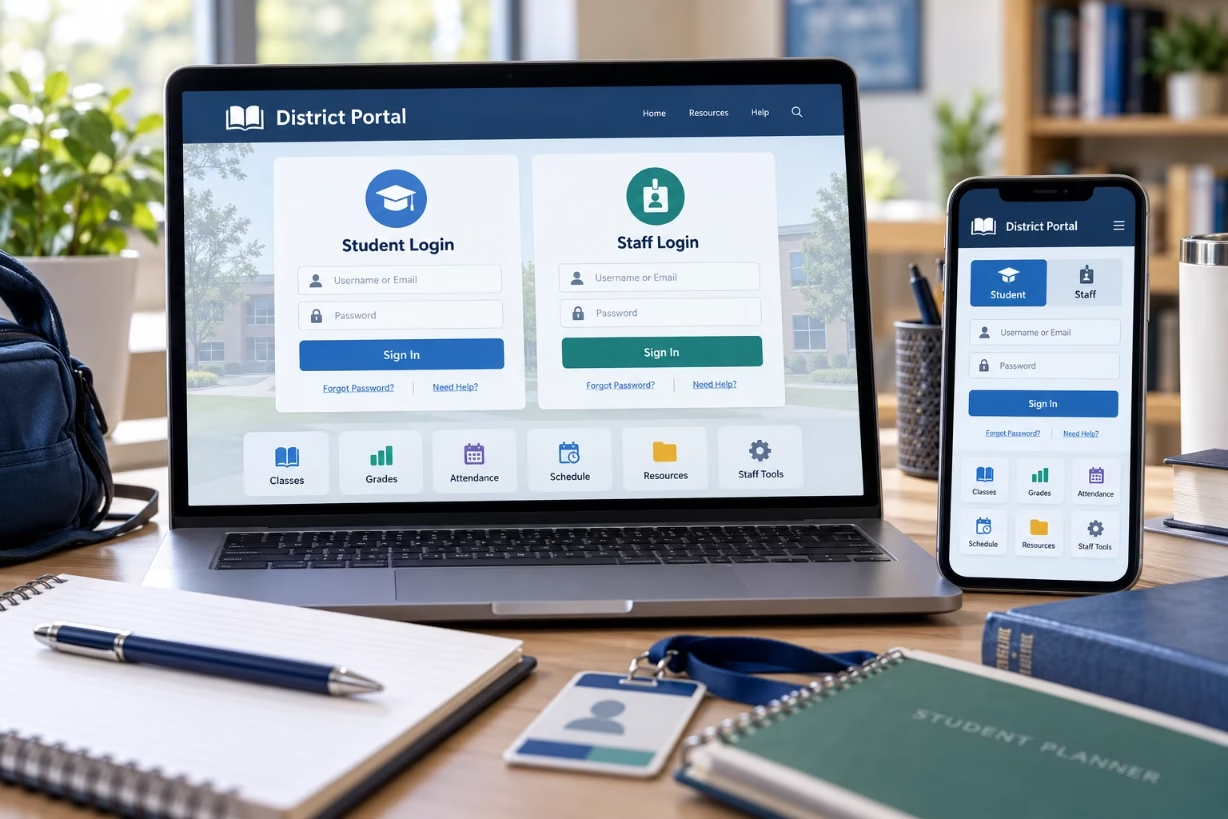
The district portal login lets students and staff securely access grades, classes, email, and digital learning tools from one place, using a single account provided by the school or district.
What the district portal really is and why it matters
When I talk about a district portal, I am talking about a single online doorway where students, teachers, and staff sign in one time and then reach almost everything they need for school. A good district portal keeps daily school life simple. One login. One dashboard. One place to find grades, lesson content, messages, and support.
If you are a busy student, a teacher who juggles a full schedule, or a staff member who needs data and tools, district portal access can be the difference between a smooth day and a frustrating one. I have seen people waste time searching for separate links, forgetting passwords, and bouncing between websites. The district portal fixes most of that by giving a central hub for accounts and tools.
How student and staff accounts work inside a district portal
Every modern district portal follows a simple idea. The district creates a digital identity for each person, connects that identity to the district portal, then uses it to control what each person can see and do. The student account is built for learning, while the staff account is built for teaching, support, or administration.
On the surface, it feels like “just a login.” Under the hood, the portal connects to many systems. That is why you often see a district portal tied to learning management systems, gradebooks, testing platforms, library tools, email, and even cafeteria balances. When you sign in, the portal checks who you are, then quietly passes your identity to each approved tool.
Student login to a district portal, step by step
If you are a student trying to log in, the steps are usually simple, but the small details matter. I will walk through a common pattern so you know what to expect, even though your school may use a slightly different layout or brand name.
First, you open a browser on your laptop, Chromebook, tablet, or phone. Next, you go to the district portal page. Many districts pin this link on the main district site, the school site, and sometimes as a shortcut on school devices. Some districts even call it “student portal” or “launchpad,” but it is still a district portal at its core.
Once you reach the login screen, you enter your district username. This might match your student ID number, or it might be a short name, often combined with part of your last name. Then you type your password. The district sets the first password and might ask you to change it at first login. If your district uses single sign on, you might log in with your Google Workspace or Microsoft 365 account instead, still going through the district portal front door.
After you press “Sign in” or “Log in,” the system checks your account against the district’s directory. If everything matches, it sends you to your personal district portal dashboard. From there, you can open apps with a click, see important alerts, and go straight to your classes and resources.
Staff login to a district portal and extra features they see
Staff accounts work in a similar way, but there are a few extra layers. When you are a teacher, counselor, or office staff member, your district portal login usually has higher access rights. You use the same portal page, but the system sees your account as staff and loads different tools.
Teachers might see a gradebook, attendance tools, curriculum resources, and professional learning apps right on the main district portal screen. Support staff might see student information systems, ticketing tools, or HR systems. District leaders often get data dashboards and reporting apps. The same district portal becomes many different workspaces, shaped by the role tied to each account.
Most districts protect staff accounts with stronger security. That can mean longer passwords, more frequent password changes, or extra verification like a code sent to a phone. From my point of view, the small extra step is worth it, because staff accounts connect to sensitive records and private student data.
What you can usually do once you are inside the portal
The real power of a district portal shows up after you log in. Instead of jumping between random bookmarks, you see a clean panel of apps and links your district has approved. Every student and staff dashboard can be a bit different, but there are common tools that most district portals include.
Students often see links to their classes, assignments, email, calendar, cloud drives, reading platforms, and video tools. They might also see a digital library, online textbooks, and test prep resources. Some districts add access to cafeteria balances, bus information, and school announcements inside the same district portal view.
Staff members see teaching or work tools such as lesson planners, assessment systems, student information systems, behavior tracking, and communication platforms. Many districts design the district portal so a teacher can go from taking attendance, to checking messages from families, to opening a digital assignment in just a few clicks.
Getting your first district portal account as a student
If you are new to a district, the first question you usually have is simple. How do I get my district portal username and password? In most districts, your account is created when you enroll and is linked to your student ID in the central database.
Usually, you receive this information in a welcome email, printed letter, or during orientation. Some schools give homeroom teachers a list of temporary passwords to hand out. Others tell families to check the parent portal, which then shares how the student logs in to the district portal. If you did not get any of this, your best move is to visit the school office or the library and ask for your district portal login details.
Once you get your first password, the portal will likely ask you to set a permanent one you can remember. Pick something strong but simple enough that you will not need to write it on a sticky note taped to your laptop. You might also be asked to set security questions to help recover your account in the future.
Getting and managing a staff district portal account
For staff, the process usually goes through human resources or IT. When a new teacher or support staff member joins the district, HR enters their details into the HR system, and IT uses that data to create a staff profile. That profile then syncs with the district portal directory. The login often matches the work email address, sometimes with a staff ID mixed in for unique identification.
Most districts send new staff a secure email with login instructions, password rules, and how to access the district portal from both on campus and at home. In some cases, the first login must happen on a school network so that devices and security settings can attach to the account. After that, staff can sign in to the district portal from almost anywhere, as long as they follow district security rules.
As staff responsibilities change, their district portal view can also change. A teacher who becomes a department chair, for example, might see new apps for data or scheduling appear automatically after the role is updated in HR or the central directory.
Keeping district portal passwords secure but manageable
Password trouble is one of the most common reasons people get locked out of a district portal. I have seen students type the wrong capital letter over and over, and staff reuse weak passwords across systems. Both cases put the entire portal ecosystem at risk.
Most districts now set clear password rules. That can include a minimum length, a mix of letters, numbers, and symbols, and a requirement to avoid simple words or personal details. In a busy school setting, the trick is balancing strong rules with something people can remember. A district portal policy that is too complex can push people to write passwords on paper or share them.
My practical advice is to build a phrase you can remember easily and then mix in numbers and symbols in specific spots. If your district allows password managers for staff, that can also help. Whatever method you use, never share your district portal password with friends, classmates, or even coworkers. IT staff and administrators will never need it. If someone asks you for it, treat that as a warning sign.
Recovering a district portal account when you forget your password
Almost everyone forgets a password at some point, especially when the district portal is only one of many logins you deal with. Luckily, most districts give a few clear ways to recover access without too much stress.
On the login screen, look for a link like “Forgot password” or “Need help signing in.” Clicking this usually leads to a recovery page tied directly to the district portal. You might be asked to answer security questions, enter an email address, or type a one time code sent to your phone or a guardian’s phone.
If that does not work, the next step is contacting your school office, media center, or IT help desk. Sometimes teachers can reset student passwords from their class roster tools built into the district portal. For staff accounts, only IT or a security admin can restore access, and they will likely ask for ID or other confirmation to protect your data.
Security and privacy inside a district portal environment
A district portal is more than a shortcut page. It is a secure gate. Every time you sign in, your district is protecting grades, schedules, health records, personal messages, and sometimes financial details. That is why you see strong rules about passwords, device use, and how to log out when you are done.
Districts usually use encrypted connections so that data between your device and the district portal cannot be read by someone watching network traffic. They also use role based access, which means students see only their own records, teachers see records for their students, and staff see only the systems needed for their job. This layered design limits what a hacker or a curious user could reach, even if a password is stolen.
You have a role in this security picture too. When you use a shared computer in a lab, library, or home, always log out of the district portal when you are finished. Avoid saving passwords in a public browser and never leave your district portal screen open where others can click into your account.
Common district portal login issues and how to fix them
Even with a well built district portal, login problems will appear. When they do, a few quick checks usually solve them without needing a call to support. If you press “Login” and nothing happens, or you see an error, try to slow down and check each step.
First, confirm you are on the correct district portal page. Some districts have separate links for staff and students, and mixing them up will cause instant failure. Next, check your username; one wrong digit in a student ID or one extra letter in an email address can block access.
Then check your password, paying attention to capital letters, symbols, and number keys. If your password used to work but now fails, your district might have forced a reset for security reasons. In that case, use the password recovery process or ask for help from your school.
If login works but some tools inside the district portal are missing or broken, that can mean your role or course enrollment did not sync correctly. Teachers might not see new classes at the start of a term, or students might miss an app. In that situation, letting the counselor, registrar, or IT know is the fastest path to a fix.
Using a district portal on phones, tablets, and Chromebooks
Most district portal systems are built to work smoothly across devices, because students and staff rarely stick to one device anymore. A student might use a school Chromebook during the day and a family tablet at night. A teacher might bounce between a classroom desktop, a laptop, and a phone.
Modern district portal home pages usually resize automatically to fit different screens. Some vendors also offer dedicated mobile apps that connect to the portal. On a phone, you can tap icons instead of clicking, but the idea stays the same: one district portal login gives access to all your connected tools.
If you switch devices often, try to use a modern browser like Chrome, Edge, or Safari, and keep it updated. Old browser versions can cause display or login problems. Also avoid using public Wi Fi without protection for staff work, especially when opening sensitive tools through the district portal.
How single sign on connects with your district portal
You may hear your tech staff talk about single sign on, often called SSO. It sounds technical, but it simply means that one login to your district portal lets you enter other apps without typing your password again and again.
Once you sign in to the district portal, the system tells each connected app that you are already verified. The app then lets you in automatically, guided by your student or staff profile. This saves time, cuts down on forgotten passwords, and lowers the risk of people writing the same weak password on every site.
If SSO ever fails and an app asks for a separate login, the district portal is still the best starting point. Often, signing out of the portal completely and then signing back in will repair the connection to that app.
How parents and guardians fit into the district portal picture
While the focus of a district portal is usually student and staff login, families are part of the story too. Some districts build a separate parent view using the same portal system. Others link the district portal to a parent portal for grades, attendance, and messages.
Parents and guardians usually get their own usernames and passwords. From there, they can log in to track how a student is doing, what assignments are due, and what messages came from teachers. They might not see the full district portal used by staff, but the idea is the same. One sign in takes them to key school information in a single place.
When families use these tools, student success often goes up. The district portal makes school feel more open and clear. Instead of guessing, families can see the same updates that students and teachers see.
Best habits for students using a district portal every day
Over time, the district portal can become part of your daily routine. A few small habits can make it a helpful launch point instead of a hurdle. I like to think of the portal as a morning check in, like looking at the day’s weather before leaving home.
Each morning, log in to your district portal and scan for new messages, due dates, and alerts from your teachers. Use it to open your main learning app, not a random bookmark. At the end of the day, log out, especially on shared devices. When you treat the district portal as your first and last stop online for school, you miss fewer updates and stay better organized.
Best habits for staff using the district portal as a work hub
For staff, the district portal can be a true work hub. I have seen teachers keep twenty tabs open at once, then lose track of which one holds grades, which one holds attendance, and which one holds emails. Using the district portal as a base helps cut that noise.
Start your day with the portal dashboard, not your inbox alone. Let the portal lead you to each tool in a stable, secure way. Close tabs you are no longer using instead of leaving everything open. Return to the district portal home between tasks so you always know where you stand.
Also, keep an eye on portal announcements. Many districts post quick alerts there about system updates, outages, or new tools. Reading those short notes through the district portal can save you from surprises later in the day.
Why a strong district portal benefits the whole school community
When a district invests in a clear, well designed district portal, everyone feels the effect, even if not everyone thinks about it directly. Students get a simple path to learning tools, staff get organized access to systems, and families gain clearer windows into school life.
The login itself may seem small, but it shapes how people experience digital learning and work. The more students and staff rely on the district portal as a trusted starting point, the more value the district gets from its technology budget and planning.
At its heart, a district portal is about access and trust. When it works well, you hardly notice it. You just sign in, do your work or learning, and sign out, knowing that the systems behind it are keeping your information safe and your tools connected.
Final thoughts on making the most of your district portal login
When you hear the words “district portal,” it might sound like just another login screen to fight with. From what I have seen in real classrooms and offices, it is much more than that. It is a shared starting point for students and staff, one that can support daily habits, protect private data, and tie scattered tools into one clear experience.
If you learn how your own district portal works, keep your password safe, and use the portal as your main doorway to school technology, you make your days a little smoother. You also help your district keep everyone’s information secure. One account, one district portal, and a more focused way to learn and work.