
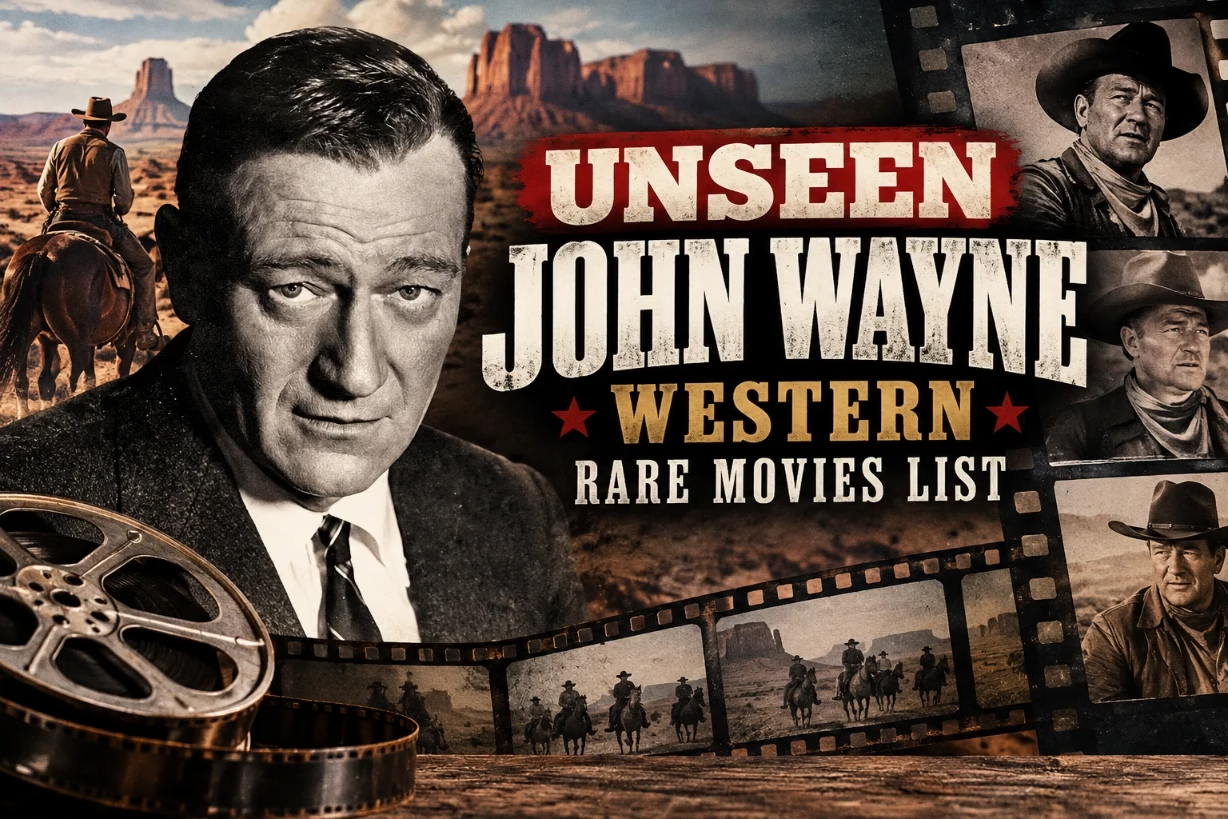
An unseen John Wayne western rare movies list usually points to his early B westerns from the 1930s and a few later oddities that casual fans skip. Below I walk through the most overlooked titles, what makes them special, and how to actually watch them today.
Why Unseen John Wayne Western Rare Movies Still Matter
When people talk about John Wayne, they usually jump straight to “Stagecoach,” “The Searchers,” or “True Grit.” I get that. Those are the big ones. But the unseen John Wayne western titles, the rough little programmers and forgotten double features, tell a different story about him as an actor and as a person learning his craft.
If you only know the polished legend in his famous roles, you are missing the long road that got him there. In those low budget westerns, Wayne was young, hungry, and still figuring out how to carry a film. The camera is closer. The budgets are smaller. The plots are thin. Yet the energy is raw, and that is exactly why these rare westerns pull me in.
In this guide, I walk through an unseen John Wayne western rare movies list that focuses on titles most casual viewers skip, but serious fans end up loving. I will mix background, short plot notes, personal observations, and some hints about where these films fit in his larger career path.
How I Define An “Unseen John Wayne Western”
Before listing titles, I want to be clear about what I mean by an unseen John Wayne western. I am not saying these movies are totally lost or impossible to watch. Most are available somewhere if you dig around. But they check at least one of these boxes in my mind:
- They were made before “Stagecoach” made him a star.
- They were released as cheap B westerns for double bills.
- They were overshadowed by later, bigger classics.
- They almost never show up on casual “best John Wayne westerns” lists.
So for this unseen John Wayne western rare movies list, I lean hard on early 1930s titles and a few later deep cuts where Wayne did something different from his usual image. If you already know every frame of “Rio Bravo” and “Red River,” this is where you go next.
Section 1: The Monogram “Lone Star” Westerns
For pure unseen John Wayne western energy, nothing beats the cheap and cheerful Monogram Pictures series, often called the Lone Star westerns. Between 1933 and 1935, Wayne made a long stretch of low budget westerns that studios cranked out quickly to fill theater schedules.
Most of these run barely over an hour. The stories blur together if you watch them back to back. Still, you can watch Wayne slowly build the persona that later made him famous. His walk, his use of silence, his way of reacting to danger, it all starts here.
Riders of Destiny (1933)
“Riders of Destiny” sometimes gets tossed around as the first true Lone Star western for Wayne. He plays Singin’ Sandy Saunders, which already tells you this movie feels different. Yes, they tried to sell him as a singing cowboy. For many fans of unseen John Wayne western movies, this alone makes it a must watch curiosity.
The songs feel stiff and strange compared to later smooth singing cowboys, and you can almost see Wayne himself fighting the idea. But that tension makes it fun. Underneath the gimmick, you still get classic elements: a greedy water baron, a town in trouble, and a lone rider forced to take a stand.
The Lucky Texan (1934)
In “The Lucky Texan,” Wayne plays Jerry Mason, who teams up with his older partner to work a gold mine. What I like here is the mix of comedy and action. There is a light, playful feeling in the early scenes, then the story turns dark when crooks move in to steal the mine.
This is not a deep psychological western. But as an unseen John Wayne western, it shows him relaxing into easy banter with character actors, learning how to share the screen instead of just posing like a hero. The stunt work with horses and wagons also lets you see how physical these shoots really were.
The Man from Utah (1934)
“The Man from Utah” stands out on this unseen John Wayne western rare movies list for its rodeo background. Wayne plays a wandering cowboy who ends up in a crooked rodeo run by outlaws. The story gives you bronc riding, roping contests, and behind the scenes cheating, which feels a little fresher than the usual cattle rustling plot.
To me, this film captures Wayne at a crossroads. He still looks like a kid compared to the hardened man he becomes later, but his body language already carries power. When he steps into the arena or stares down a villain, you can feel the future star under the cheap sets and recycled music.
Blue Steel (1934)
“Blue Steel” might be the best known of the Lone Star titles, but it still qualifies as an unseen John Wayne western for a lot of people. Wayne plays a mysterious stranger who rides into a town being squeezed by a wealthy crook who secretly wants the land.
The twist is thin by modern standards, but the pacing is crisp, and the final showdown during a storm gives the movie a rough, handmade power. Watch this one with an eye on Wayne’s eyes and shoulders; so much of his later aura is already right there, just without the richer scripts.
Section 2: Rare Pre–Stagecoach Experiments
Outside the Monogram run, Wayne did several other pre–”Stagecoach” films that slide under the radar. These do not always show up when people search for unseen John Wayne western movies, but they should.
The Big Stampede (1932)
“The Big Stampede” often gets overshadowed by “The Big Trail,” the huge early epic that nearly ruined Wayne’s career when it flopped. By contrast, “The Big Stampede” is a leaner western where he plays a deputy battling cattle thieves and land grabbers.
The movie is partly a remake using recycled footage, which is one reason it feels strange at times. But this very strangeness works in favor of anyone seeking an unseen John Wayne western. The mix of new scenes and old crowd shots gives it a dreamlike, patchwork quality you do not see in more polished projects.
Somewhere in Sonora (1933)
“Somewhere in Sonora” combines western flavor with a cross–border adventure. Wayne travels into Mexico to help a friend’s son who has fallen in with a bad crowd involved in a dangerous horse race scheme. The film gives more screen time to local culture than many later westerns, even though it still uses stereotypes of its time.
What I like here is Wayne’s softer side. He is not just a stern gunman. He plays a loyal friend trying to save another man from his own mistakes. If you want unseen John Wayne western examples where he shows warmth and patience, this belongs on your watch list.
The Star Packer (1934)
“The Star Packer” is famous in small fan circles for its trap gun sequence. Wayne plays a lawman hunting a mysterious mastermind behind a gang of killers. To defend his office, he rigs a clever hidden gun that fires when the door swings open. It is a simple idea, but the staging makes it feel surprisingly tense.
Outside that one scene, the film moves like many early B westerns, with masked riders and shadowy meetings here and there. Still, if your goal is to dig into unseen John Wayne western highlights that show early hints of creative staging, “The Star Packer” deserves a spot.
Section 3: Poverty Row Gems Later In His Career
After “Stagecoach” and the big breakout, Wayne mostly left these tiny budgets behind. Even so, a few later films sometimes slide off general radar and end up as unseen John Wayne western choices for younger viewers who start with his 1950s hits.
Angel and the Badman (1947)
“Angel and the Badman” often gets more love in niche circles than among casual fans. Wayne plays Quirt Evans, a wounded gunfighter taken in by a Quaker family. A young woman from the family tries to guide him away from violence. The story moves slowly, built more on mood and quiet talk than constant gunplay.
This film shows Wayne wrestling with gentler themes; faith, forgiveness, and the hard pull of old habits. If someone asks me for an unseen John Wayne western that reveals emotional conflict rather than pure bravado, I usually start here. The romance feels simple but honest, and the final moral choice still hits hard.
Allegheny Uprising (1939)
Set before the American Revolution, “Allegheny Uprising” has Wayne playing a frontier rebel clashing with British authorities over how they treat settlers and Native Americans. It is part adventure, part political story, and its tone can feel uneven, moving from light fights to darker protest themes.
For viewers used to clear good–guy versus bad–guy lines, this one can surprise you. The story deals with stubborn officials, misguided rules, and local people pushed around by distant power. As an unseen John Wayne western, it lets you see him in a proto–patriot role before his later war films fully defined that side of his screen image.
Three Godfathers (1948)
Many film lovers know John Ford’s later “The Searchers,” but “Three Godfathers” still quietly sits on the edge of the main canon. Wayne plays one of three outlaws who find a dying woman and promise to save her newborn child. What begins as a crime story turns into a journey of sacrifice through the desert.
The movie has clear religious echoes, almost like a western Nativity, and that tone turns some viewers away. But it is also one of the few unseen John Wayne western films where he openly plays a flawed man growing toward real kindness. The baby in his arms softens his rough posture, and that contrast gives the story weight.
Section 4: Why These Rare Westerns Feel So Different
If you sit down and marathon a bunch of unseen John Wayne western movies, especially the cheapest ones, you start noticing patterns that feel very different from his big studio work.
First, pace. These films move quickly because they had to wrap up under an hour. Plots jump from setup to gunfight with almost no filler. That makes them perfect for viewers who want pure western flavor without long speeches.
Second, texture. You can see real dust, uneven sets, and stunts that look barely rehearsed. That messy texture gives the movies a rough charm. In a world of clean digital images, watching a horse skid in real dirt instead of on a soundstage feels alive.
Third, Wayne himself changes. In the early unseen John Wayne western titles, he looks lean and sometimes unsure, almost like a farm kid who just walked into town. As the years go by, his body thickens, his movements slow down, and his screen presence grows heavier. Watching that change across rare and famous films together gives you a living timeline instead of a fixed statue.
Section 5: Tips For Watching Unseen John Wayne Western Films Today
Tracking down every unseen John Wayne western can take time, and I have stumbled through plenty of bad prints and confusing DVD sets along the way. A few simple habits can make the hunt and the viewing experience smoother.
Accept The Low Budget Limits
Most of these rare movies were never meant to be studied decades later. You will see repeated shots, recycled music, and sometimes awkward editing. I suggest going in with a relaxed mind. Enjoy the rhythm, smile at the rough edges, and focus on Wayne’s growth rather than modern polish.
Watch In Small Groups
If you binge ten unseen John Wayne western B pictures in a weekend, they will probably blur together. I like to pair one early cheap film with one later, more famous western. For example, “The Lucky Texan” followed by “Rio Bravo.” That way, you can compare his acting across time and notice small details instead of getting numb.
Pay Attention To Supporting Actors
Part of the joy of exploring an unseen John Wayne western list is seeing familiar faces show up again and again. Sidekicks, villains, sheriffs, and saloon keepers often return under new names in different towns. Treat them like a traveling theater company. The more you recognize them, the richer the experience feels.
Section 6: What These Unseen Westerns Reveal About John Wayne
When people argue about John Wayne, they usually talk about politics or pick one or two famous movies to defend or attack. But when you live for a while with the unseen John Wayne western catalog, your picture of him gets more layered.
You see a young worker, not just a star, showing up day after day to ride, fight, fall off horses, and try new types of roles. You see him fail, try again, and slowly shape his own screen identity. That workmanlike side earns respect in a quiet way.
You also notice his sense of humor more. In many rare titles, he smiles and jokes far more than in his later, tougher roles. There is a hint of play in his eyes that almost disappears when he becomes a symbol in big studio epics. The unseen John Wayne western films hold on to that lighter version of him a bit longer.
Most of all, these movies remind us that icons do not arrive fully formed. They are built film by film, often in small, forgotten projects. When you watch these rare westerns, you are stepping into the workshop, not the museum.
Section 7: Building Your Own Unseen John Wayne Western Rare Movies List
The titles I picked here are a starting point, not a final map. If you want to build your own unseen John Wayne western list, you can grow it based on what you like most.
If you enjoy tight action and stunt work, lean harder into the early Monogram pictures. If you prefer emotional stories, chase down more mid–career films like “Angel and the Badman” and “Three Godfathers.” If frontier politics grab you, spend time with “Allegheny Uprising” and other historical pieces.
As you watch, keep notes for yourself. Write down which unseen John Wayne western surprised you, which line stuck with you, or which side character stole a scene. Over time, you will have your own personal ranking that means more than any generic top ten list online.
Conclusion: Why These Rare Westerns Are Worth Your Time
If you care about westerns, film history, or just want to see a famous actor grow in real time, taking a slow tour through the unseen John Wayne western catalog is worth every evening you give it. These movies are short, rough, and at times clumsy, but they are also honest records of a working actor learning who he is on screen.
In a world where everyone sees the same handful of classic titles, stepping off the main highway into these side roads feels personal. You are not just replaying what everyone quotes. You are discovering small moments, strange choices, and forgotten experiments that shaped the larger legend. That quiet thrill of discovery is what keeps me going back to one more unseen John Wayne western, long after I thought I had seen it all.