
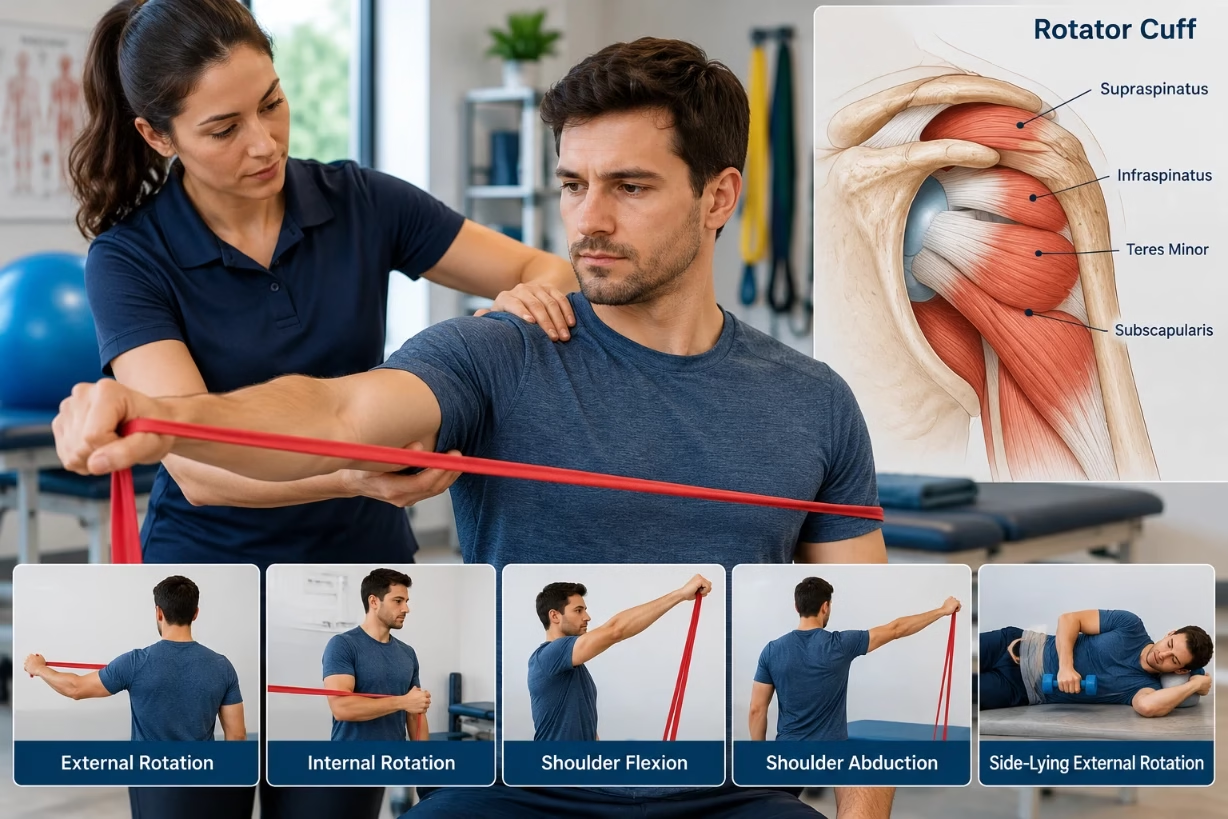
Physical therapy for rotator cuff issues exercises usually focus on reducing pain, restoring shoulder motion, and slowly building strength so you can reach, lift, and sleep with less discomfort. The right plan mixes rest, stretching, and targeted strengthening without irritating the injured tendon.
Why physical therapy for rotator cuff issues matters so much
When I talk with people about shoulder pain, I notice a common pattern. Many try to push through it, hoping the ache will just fade on its own. With the rotator cuff, that often backfires. Physical therapy for rotator cuff issues can protect you from long term stiffness, weakness, and more serious tears by guiding how you move instead of guessing.
Your rotator cuff is a group of four small muscles and tendons that wrap around the top of your upper arm bone. They help you lift your arm, rotate it, and keep the ball of the joint centered in its socket. When one part of that group gets irritated or damaged, your whole shoulder can feel off. You may notice pain when reaching overhead, putting on a shirt, lifting a bag, or even when you roll onto that side in bed.
Physical therapy for rotator cuff issues exercises are designed to calm the angry tissue down while still keeping the joint moving enough so it does not freeze up. The trick is finding that sweet spot between too much rest and too much strain. That is what I will walk you through step by step.
Common rotator cuff problems that respond well to therapy
Not every shoulder pain is the same, but a lot of them share similar patterns. When I say physical therapy for rotator cuff issues, I am usually thinking about a few main problems:
Tendonitis or tendinopathy. This is irritation or wear and tear of the rotator cuff tendon, often from repeated overhead use, poor posture, or age related changes. Pain may feel sharp with certain moves and dull at rest.
Rotator cuff impingement. Soft tissue gets pinched between the top of the arm bone and the bony roof of the shoulder. Raising your arm above shoulder height often hurts the most.
Partial tears. Some of the tendon fibers are torn but not all the way through. These can often be handled with well planned exercises and activity changes instead of surgery.
Postoperative recovery. Even after surgery, physical therapy for rotator cuff issues is key. The repair needs graded motion and strength work to heal in a strong, flexible way.
Across all of these, the goals remain similar: reduce pain, restore motion, then build durable strength and control. The steps below follow that natural order.
How to know if you should start physical therapy now
If you are wondering whether this is the right time to start exercises, I like to use a few simple signs. You might benefit from physical therapy for rotator cuff issues if:
- Your shoulder has hurt for more than 1 to 2 weeks without a clear bruise or fall.
- Lifting your arm to the side or overhead causes sharp or pinching pain.
- Reaching behind your back to tuck in a shirt feels stiff or weak.
- Night pain wakes you up or makes it hard to sleep on that side.
- Daily tasks like carrying groceries or washing your hair feel harder than usual.
However, if you had a strong pop, cannot lift your arm at all, notice obvious deformity, sudden severe weakness, or deep chest pain, you need medical care first. After serious problems are ruled out or treated, physical therapy for rotator cuff issues can safely follow.
Key principles before starting rotator cuff exercises
Before you jump into the exercise list, I want to set a few ground rules that my own patients hear right away. These points matter more than the perfect number of sets or reps.
1. Pain guide, not pain fear. Mild discomfort is common at first, but sharp, stabbing, or worsening pain is not the goal. I often suggest a simple scale in your head from 0 to 10. Try to keep exercise pain around a 2 to 3 out of 10. If it jumps to a 6 or more and stays there after, you likely did too much that day.
2. Quality over quantity. With physical therapy for rotator cuff issues, sloppy form can force bigger muscles to cheat. That leaves the small stabilizing muscles weak. Move slowly, stay in control, and stop before your form falls apart, even if you have reps left on paper.
3. Little moves add up. Many useful exercises look small or boring, especially band work or lying rotations. Still, they build the deep support that lets you later do heavier lifting, sports, or overhead jobs with less risk.
4. Respect rest days. Rotator cuff tendons need time between strength days to heal and adapt. I usually like strength work 3 days a week, with lighter motion and posture work on other days. This rhythm helps physical therapy for rotator cuff issues work with your body instead of against it.
Phase 1: Gentle motion and pain control
During the early phase, the aim is to lower pain, reduce stiffness, and keep the joint moving enough so it does not lock up. These are usually safe for most people, but you should always clear them with your doctor or physical therapist if you have other medical conditions.
1. Pendulum exercise
This classic move helps loosen the joint with very low load on the tendon.
How to do it: Lean forward with your good hand on a table or counter, let the sore arm hang, fully relaxed. Gently let it swing in small circles, about the size of a dinner plate, then forward and back, then side to side.
Tips: Use your hips to shift weight and move the arm, rather than using shoulder muscles. Do 20 to 30 seconds each direction, 1 to 2 times a day. In physical therapy for rotator cuff issues after surgery, this is often one of the first safe moves.
2. Passive or assisted shoulder flexion with a stick
How to do it: Lie on your back, hold a stick or broom handle with both hands. Keep your sore arm relaxed. Use your good arm to gently push the stick and lift the sore arm overhead as far as feels comfortable. Hold for 3 to 5 seconds, then lower.
Tips: Aim for 10 to 15 reps. Your painful shoulder should feel like a passenger, not the driver. If physical therapy for rotator cuff issues is early after a tear or surgery, keep the motion within the range your provider allows.
3. Table slide for forward and side motion
How to do it: Sit at a table, place a towel under your sore hand. Slide your hand forward on the table, letting your body lean with it, until you feel a gentle stretch in your shoulder. Hold for a few seconds, then slide back. Do the same sliding out to the side.
Tips: Do 10 to 15 gentle reps in each direction. This move lets you explore motion with support from the table, which many people find less intimidating in early physical therapy for rotator cuff issues.
Phase 2: Active motion and early strengthening
Once your pain is calmer and your basic range of motion improves, you can begin active exercises. This means your shoulder muscles start doing the work, but still without heavy weights.
4. Scapular setting and posture work
Good shoulder blade control gives the rotator cuff a solid base. I focus on this with almost everyone doing physical therapy for rotator cuff issues.
How to do it: Sit or stand tall, chest gently lifted. Imagine drawing your shoulder blades slightly down and toward each other, as if tucking them into your back pockets. Hold for 5 to 10 seconds, then relax.
Tips: Avoid shrugging your shoulders toward your ears. Repeat 10 times, a few times daily. You can also practice this posture while walking or sitting at a desk.
5. Isometric external and internal rotation
Isometric means the muscle works without the joint actually moving. This is handy if rotation still feels touchy.
External rotation: Stand sideways next to a doorframe with your elbow bent at 90 degrees and tucked to your side. Press the back of your hand gently into the frame as if trying to rotate your arm outward, but do not let it move. Hold 5 to 10 seconds, repeat 8 to 10 times.
Internal rotation: Turn so your palm faces the frame and press your palm in, as if trying to rotate your arm inward. Same holds and reps.
These isometrics are a bridge between early rest and more challenging band work in physical therapy for rotator cuff issues.
6. Assisted to active arm raises
How to do it: Lie on your back. Start by using your good arm to help lift the sore arm straight up toward the ceiling, then overhead if you can. Over time, try to let the sore arm do more of the work until you can lift it on its own.
Tips: Move slowly, keep your shoulder from hiking toward your ear. Aim for 10 to 15 reps, staying in a comfortable range.
Phase 3: Strengthening the rotator cuff with bands and light weights
When your motion is mostly back and pain is milder, it is time to build real strength. This is where physical therapy for rotator cuff issues exercises often focus on resistance bands, which are gentle at the start of the move and gradually more challenging as you rotate.
7. Band external rotation at the side
This is a core move for the infraspinatus and teres minor, two key rotator cuff muscles.
How to do it: Attach a light band to a doorknob. Stand sideways to the door with the band in the hand of your sore side, elbow bent 90 degrees, tucked against your side. Start with your forearm across your belly. Slowly rotate your forearm outward, keeping your elbow glued to your ribs, then return.
Tips: Do 2 to 3 sets of 10 to 15 reps. Stop before your shoulder rolls forward or your elbow drifts away from your side. In physical therapy for rotator cuff issues, I usually tell people to feel the work in the back of the shoulder, not in the neck.
8. Band internal rotation at the side
How to do it: Turn around so the band pulls your hand outward. Start with your forearm slightly out to the side. Rotate your forearm toward your belly while keeping your elbow tucked, then return.
Tips: Same sets and reps, 2 to 3 sets of 10 to 15. Keep motion smooth and avoid twisting your trunk to cheat.
9. Sidelying external rotation with light weight
This is a great way to load the rotator cuff without stressing it overhead.
How to do it: Lie on your good side, sore arm on top, elbow bent 90 degrees and resting on your side, forearm across your belly. Hold a light weight, even 1 to 3 pounds is plenty. Slowly rotate your forearm up toward the ceiling, then lower with control.
Tips: Avoid letting your shoulder roll backward. Aim for 2 to 3 sets of 8 to 12 reps. If you feel deep ache that hangs on for more than a few hours, you may need to cut back the weight for now. With consistent practice, this single move can change how secure your shoulder feels, which is why I lean on it in physical therapy for rotator cuff issues.
10. Scaption raises in the pain free zone
Scaption means lifting your arm in the plane halfway between straight out to the front and out to the side. This is often kinder to the rotator cuff.
How to do it: Stand tall, arms relaxed at your sides, thumbs pointing up. Raise your sore arm in that diagonal plane about 30 to 45 degrees from your body, only as high as you can without sharp pain, then lower.
Tips: Start without weight, then add 1 to 3 pounds as you improve. Do 2 sets of 10 reps. Do not swing or shrug.
Phase 4: Functional and overhead strengthening
When basic strength is back and pain is low, physical therapy for rotator cuff issues shifts toward the real world. The shoulder has to work while you reach, twist, carry, and sometimes throw or serve.
11. Wall slides with band
How to do it: Loosely loop a light band around your wrists. Stand facing a wall and place your forearms on it, elbows bent about 90 degrees. Gently press your wrists outward into the band, then slowly slide your arms up the wall, staying in that outward pressure. Go as high as you can comfortably, then slide back down.
Tips: This move builds both rotator cuff and shoulder blade control in a more functional way. Try 2 sets of 8 to 12 reps.
12. Serratus punches
Even though this targets the serratus anterior muscle, it matters a lot in physical therapy for rotator cuff issues because it supports smooth overhead motion.
How to do it: Lie on your back with your sore arm straight up, holding a very light weight or no weight at first. Without bending your elbow, push your hand toward the ceiling by lifting your shoulder blade off the floor a bit, then relax back down.
Tips: The motion is small. Think of sliding your shoulder blade forward around your rib cage. Do 2 to 3 sets of 10 to 15 reps.
How often to do physical therapy for rotator cuff issues exercises
People often ask me how many days a week is best. Of course it varies, but this general rhythm works for many adults:
- Range of motion and gentle stretching: Daily, as long as pain stays mild.
- Strength training with bands or weights: 3 days per week, with at least one rest day between.
- Posture and scapular control drills: Light versions almost every day, since they are low load.
If you are new to exercise or your shoulder is very sensitive, you might start with every other day for everything and build from there. The goal of physical therapy for rotator cuff issues is steady progress, not a quick, painful push.
Helpful daily habits that support your rotator cuff
Exercises alone cannot fix a shoulder if daily habits keep poking the sore spot. I like to look at the whole picture and help people tweak how they move and rest.
Watch your sleeping position. Try not to sleep directly on the painful shoulder. Many people do better lying on the opposite side with a pillow supporting the sore arm in front of them, or on their back with a pillow under the elbow.
Avoid long periods of hunched posture. Hours of rounded shoulders at a desk can narrow the space the rotator cuff tendons slide through. Set reminders to sit up tall, adjust your monitor height, and pull the screen closer so you are not leaning forward.
Break up overhead tasks. If you are painting, reaching shelves, or working overhead, take short breaks. Switch arms when you can. Use a step stool to bring the work closer instead of constantly straining at full reach. This is one of the easiest ways to support physical therapy for rotator cuff issues in real life.
Use heat or ice wisely. Ice can calm sharp pain after a busy day or workout, while gentle heat sometimes eases stiffness before exercise. Use whichever feels better to you for 10 to 15 minutes, protected with a cloth, not directly on your skin.
When to see a physical therapist or doctor in person
Self guided physical therapy for rotator cuff issues can help many people, but there are times when expert eyes make a big difference.
You should talk with a medical provider or licensed physical therapist if:
- Your pain lasts more than 4 to 6 weeks with little improvement.
- Your shoulder feels weaker over time, not stronger.
- You notice muscle wasting, where one shoulder looks smaller.
- You cannot raise your arm to shoulder height despite trying.
- You had a fall, heard a pop, and lost strength right away.
An in person exam, and sometimes imaging, can rule out a full thickness tear or other problems that might change your treatment plan. Even then, physical therapy for rotator cuff issues is almost always part of recovery, whether you have surgery or not.
Setting real expectations for recovery
Rotator cuff problems rarely heal overnight. I think it helps to have a clear picture from the start so you do not feel discouraged too soon.
Short term (2 to 6 weeks): With regular exercises and better daily habits, many people notice less sharp pain and better sleep. Range of motion usually starts to improve, although some moves will still feel stiff.
Medium term (6 to 12 weeks): Strength and control improve. Lifting light to moderate objects feels easier. Occasional twinges may still show up with fast or overhead moves, but day to day tasks feel more normal.
Long term (3 to 6 months and beyond): With steady work, the shoulder can often return to sports, heavy chores, or work demands. That is why physical therapy for rotator cuff issues focuses not only on early pain relief, but also on building a shoulder that can handle your real life for the long haul.
Of course, everyone heals at a different pace. Age, general health, job demands, and the size of any tear all play a role. What you control is your consistency and your willingness to adjust how you move while you heal.
Bringing it all together
Rotator cuff pain can make simple things like reaching into a cabinet or pulling on a jacket feel strangely out of reach. The good news is that physical therapy for rotator cuff issues gives you a clear path forward. By starting with gentle motion, then building smart strength, and finally practicing real life movements, you guide your shoulder from irritation back toward confidence.
If you follow the phases, listen to your body, and stay patient with the process, those small daily exercises will stack up over time. Whether you work with a physical therapist in person or follow a guided plan on your own, you are not stuck with shoulder pain as your new normal. With the right approach to physical therapy for rotator cuff issues, you can return to reaching, lifting, playing, and sleeping with far less worry about every move your shoulder makes.